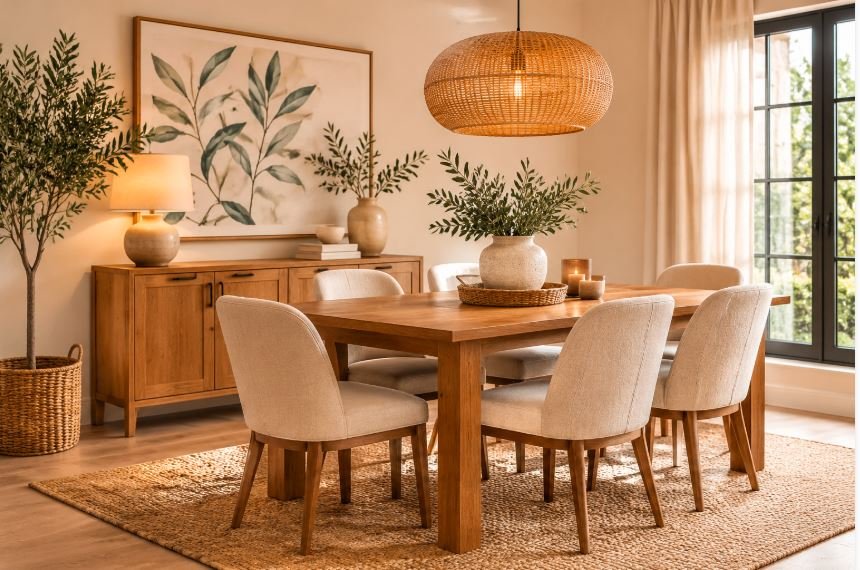
A dining room does not need expensive furniture or a complete makeover to feel inviting. Sometimes, changing the lighting, adding a textured rug, or choosing a better color palette can make the entire space feel different. The best dining room decor ideas combine good looks with everyday comfort, so the room works just as well for family dinners as it does for hosting guests.
Whether the dining area is part of an open-plan living space, a small apartment, or a separate room, the right decorating choices can make it feel more connected to the rest of the home. From modern dining room decor and statement wall art to simple table decorations and budget-friendly updates, these ideas offer practical ways to create a dining space that feels personal, balanced, and comfortable.
1. Give the Dining Room One Main Focal Point
A dining room can feel unfinished when every piece of furniture competes for attention. A better approach is to choose one main feature that naturally draws the eye.
This could be a beautiful dining table, an oversized pendant light, a large piece of artwork, or an interesting accent wall. Let that feature lead the design, then choose the surrounding furniture and accessories to support it.
For example, a solid oak dining table can become the center of attention in a room with simple chairs, warm white walls, and understated decorations.
Why it works: A clear focal point gives the room direction and prevents unnecessary decoration from making it look crowded.
2. Install a Statement Pendant Light Above the Table
Lighting can change how a dining room looks throughout the day. A statement pendant adds character while making the dining table feel like the natural center of the space.
Consider these styles:
- Glass pendants for a light and elegant appearance.
- Woven fixtures for a relaxed, natural look.
- Brass chandeliers for a more traditional setting.
- Sculptural modern lights for contemporary interiors.
- Fabric shades for softer, more diffused lighting.
The fixture should suit the table’s size and the ceiling height. A very small pendant can disappear above a large table, while an oversized fixture may overwhelm a compact dining area.
If the room is used for different activities, consider a dimmable light so the brightness can be adjusted for everyday meals and evening gatherings.
For new electrical wiring or changes to existing connections, use a qualified electrician.
3. Place a Well-Sized Rug Under the Dining Table
A rug helps define the dining area, especially in open-plan homes where the dining table shares space with a living room or kitchen.
The most important detail is choosing the correct size. Dining chairs should remain on the rug when people pull them away from the table. Otherwise, chair legs may catch on the edge, making the arrangement uncomfortable.
Good choices include:
- Flatweave rugs for easy chair movement.
- Wool rugs for a soft and natural finish.
- Low-pile rugs for easier cleaning.
- Washable rugs for busy family dining areas.
- Patterned rugs for hiding everyday marks.
Avoid thick, shaggy rugs directly under dining tables. Crumbs and food particles can become difficult to remove, and chairs may not slide easily across the surface.
4. Choose a Dining Room Color Palette That Feels Connected
Color influences the overall mood of a dining room. A well-planned palette makes different furniture pieces feel like they belong together, even when they come from different collections.
Some combinations worth considering include:
| Color combination | Overall appearance |
| Warm white and natural oak | Light and relaxed |
| Beige and dark walnut | Warm and elegant |
| Olive green and cream | Natural and calming |
| Charcoal and warm wood | Modern and dramatic |
| Terracotta and soft beige | Earthy and welcoming |
| Navy and brushed brass | Classic and sophisticated |
For a balanced result, choose one main wall color, one supporting furniture or fabric color, and a smaller accent color.
If the dining room receives little natural light, test paint samples at different times of the day. A shade that looks attractive in bright daylight may feel too dark in the evening.
5. Decorate Empty Walls With Oversized Artwork
Empty walls can make a dining room feel unfinished, even when the furniture is attractive. A large painting or framed print gives the space a clear visual feature without taking up floor space.
Abstract artwork, landscape photography, botanical prints, and textured canvas pieces are all suitable options.
Think about the furniture beneath the artwork before choosing its size. A small frame above a wide sideboard can look disconnected, while an oversized piece may overpower a narrow wall.
A simple frame in wood, black, or brushed metal can help the artwork connect with other finishes in the room.
For a more personal appearance, choose artwork that reflects the colors or interests already present in the home.
6. Use a Mirror to Reflect Natural Light
Mirrors are useful decorative elements, particularly in dining rooms that feel dark or enclosed.
A large round mirror can soften a room with many straight furniture lines. A rectangular mirror can work well above a sideboard, while an antique-style mirror adds character to traditional interiors.
Placement matters more than size alone.
Position the mirror where it reflects something attractive, such as a window, greenery, or a well-styled part of the room. Avoid placing it where it mainly reflects clutter, storage areas, or an unattractive view.
A mirror will not physically increase the room’s size, but the reflected light and extra visual depth can make the space feel more open.
7. Add Character With a Wallpaper Accent Wall
Wallpaper can introduce pattern and personality without requiring major changes to the furniture.
A single accent wall is often enough, particularly when the dining room already contains noticeable textures or decorative pieces.
Consider:
- Botanical prints for a nature-inspired interior.
- Subtle geometric patterns for modern spaces.
- Traditional floral designs for classic dining rooms.
- Textured wallpaper for a quieter decorative effect.
- Large-scale patterns for rooms with enough visual space.
Before selecting a pattern, look at the curtains, rug, upholstery, and wall art. Too many competing patterns can make the room feel visually busy.
Renters can also consider removable wallpaper, provided the product is suitable for the wall surface and the rental agreement allows it.
8. Introduce Wall Paneling for Architectural Interest
Wall paneling gives a dining room more depth than a plain painted wall. It can also make a simple furniture arrangement feel more considered.
Different styles create different effects:
- Board and batten adds clean vertical lines.
- Picture-frame molding creates a traditional appearance.
- Vertical wood slats introduce warmth and texture.
- Painted paneling gives the room a coordinated finish.
Paneling works especially well behind the dining table or along a wall with a sideboard.
For a budget-conscious update, decorative molding and paint can create a similar visual effect without installing expensive full-wall wood panels.
9. Style a Sideboard With a Few Well-Chosen Objects
A sideboard offers both storage and decoration. It provides a useful place for serving dishes, table linens, and other dining essentials while creating another surface to style.
Instead of covering the entire top with accessories, create a small arrangement with different heights.
For example:
- Place a table lamp at one end.
- Add a medium-sized framed artwork or mirror above it.
- Use a ceramic vase with natural branches.
- Keep a decorative bowl or tray nearby.
Leave enough empty space for practical use. A sideboard should not become another surface that needs constant clearing before every meal.
10. Display Beautiful Everyday Pieces on Open Shelves
Open shelving can make a dining area feel more personal, especially when there is little room for additional furniture.
Display a few attractive items that are also useful, such as ceramic plates, serving bowls, glassware, or small decorative objects.
The main challenge is keeping the shelves organized. Too many unrelated items can quickly create visual clutter.
A practical arrangement might include a collection of similar plates, two or three decorative ceramics, and one small plant.
If the shelves will hold heavy dishes, make sure their brackets and wall fixings are suitable for the combined weight. Renters who cannot drill into walls can use a freestanding cabinet instead.
11. Choose a Round Dining Table for a Compact Room
Round tables are a useful option for small dining rooms because they remove sharp corners and can make movement around the table feel easier.
They also create a more connected seating arrangement, as everyone faces toward the center.
A round table works particularly well in:
- Small apartments.
- Breakfast corners.
- Square dining rooms.
- Compact open-plan layouts.
- Informal family dining spaces.
However, a round table is not always the best option. Larger households may need a rectangular table to provide more usable seating and serving space.
Choose the shape based on the room’s dimensions and the number of people who regularly use it.
12. Consider an Extendable Dining Table
An extendable dining table is useful when the room needs to serve different purposes.
Most of the time, the table can stay compact for everyday meals. When guests arrive, additional sections create more seating space.
This is particularly helpful in apartments and smaller family homes where a large permanent table would take up too much floor area.
Before choosing one, check:
- How much space the table needs when fully extended.
- Whether the extension leaves enough room for chairs.
- Where the extra leaves will be stored.
- Whether the extension mechanism is easy to operate.
A table that extends but leaves no room to move around it is unlikely to be practical.
Before buying a round or extendable dining table, measure the available floor area, chair clearance, and walking routes. This guide to measuring a room for furniture explains how to record room dimensions and check whether furniture will fit comfortably.
13. Mix Dining Chairs for a More Personal Look
Matching dining chairs are not the only way to create a coordinated dining area. Mixing different chair styles can give the room a more relaxed and collected appearance.
The trick is to maintain at least one common design element.
For example, choose chairs with different shapes but similar wood finishes, or combine upholstered chairs in different styles using the same color family.
Another option is to use two statement chairs at the ends of a rectangular table and simpler chairs along the sides.
Pay attention to seat height and comfort. Different-looking chairs should still work comfortably around the same table.
14. Create a Cozy Dining Corner With Built-In or Freestanding Seating
A dining bench or banquette can make an unused corner feel like a proper dining area.
Unlike individual chairs, bench seating can fit neatly against a wall, making it useful in smaller homes.
For a softer appearance, add comfortable cushions in a fabric that complements the dining room palette.
If storage is limited, consider a bench with a storage compartment underneath. It can hold extra cushions, tablecloths, or items used less often.
Keep the seat depth and table height comfortable. A beautiful bench is not much use if people struggle to sit down or move away from the table.
15. Define the Dining Area in an Open-Plan Home
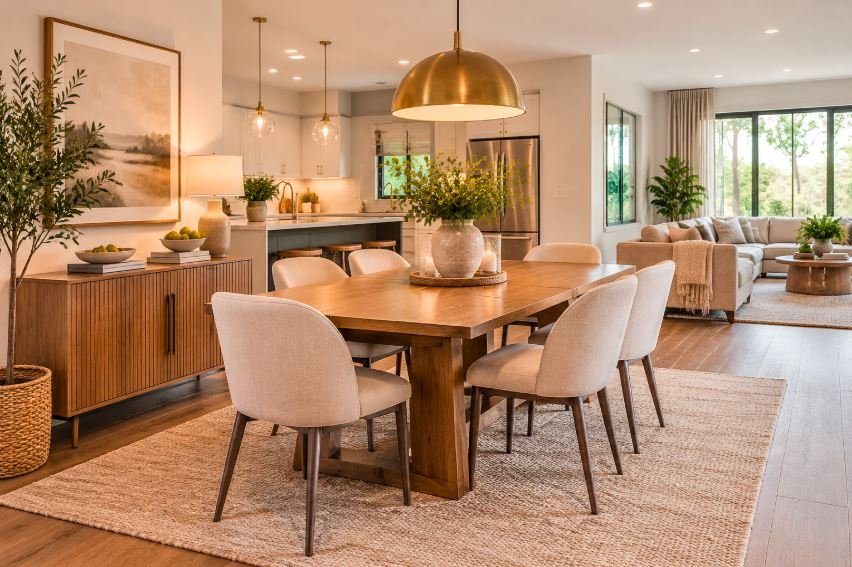
In an open-plan home, the dining area can easily disappear between the kitchen and living room.
Creating a visual boundary helps each part of the space feel intentional without adding unnecessary walls.
Try these approaches:
- Place a rug beneath the dining table.
- Hang a pendant directly above the dining area.
- Use a sideboard to separate the dining and living zones.
- Repeat a color from the kitchen or living room in the dining chairs.
- Position the table so it has a clear relationship with the surrounding spaces.
Consistency is important. The dining room should feel like its own area, but its colors and materials should still connect with the rest of the home.
16. Keep a Small Dining Room Light and Uncluttered
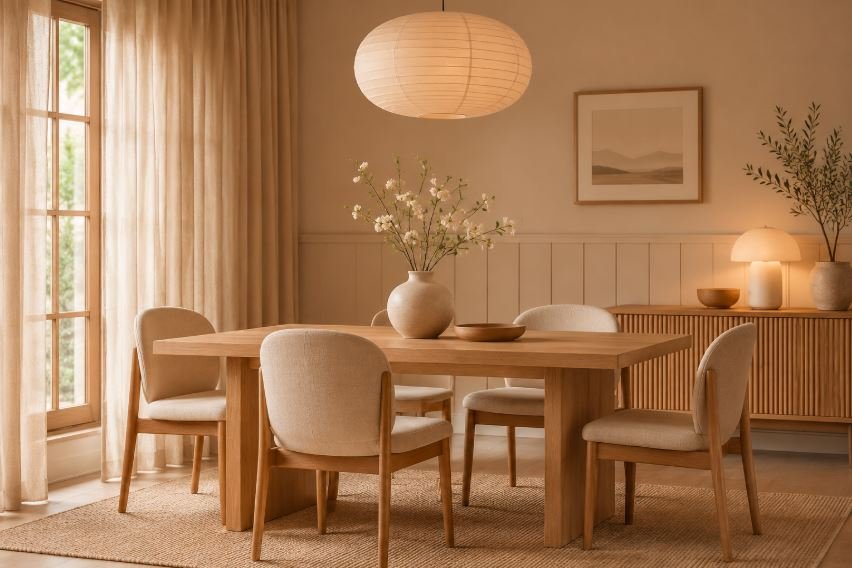
A small dining room does not need lots of decorative objects to look attractive.
Light wall colors, simple furniture, and a limited number of accessories can make the available space feel more open.
Some useful choices include:
- Warm white or soft beige walls.
- Glass or visually lightweight furniture.
- Slim dining chairs.
- A simple centerpiece.
- Mirrors placed to reflect natural light.
- Curtains that do not overwhelm the windows.
This does not mean everything needs to be white. A dark wood table or a colorful artwork can provide contrast without making the room feel crowded.
The goal is to create a balance between open space and personality.
17. Choose Slim Furniture That Leaves More Floor Visible
Heavy furniture can make a small dining area feel more crowded than it actually is.
Tables and chairs with slimmer legs allow more of the floor to remain visible, creating a lighter appearance.
Consider a narrow rectangular table, open-frame chairs, or a compact sideboard with raised legs.
Furniture should still be stable and comfortable. Very delicate-looking pieces may not be suitable for homes with young children or frequent everyday use.
A good balance is furniture that looks lightweight but can handle regular use.
18. Make Use of Vertical Space Instead of Adding More Furniture
When floor space is limited, walls can provide useful storage and decoration.
Floating shelves, wall-mounted cabinets, and narrow display units can hold items without taking up much room.
A few practical options include:
- Shelves for serving dishes.
- Wall-mounted cabinets for glassware.
- A narrow display shelf for decorative ceramics.
- Hooks for reusable table linens or accessories.
- A vertical artwork arrangement above a sideboard.
Keep frequently used items within easy reach and avoid placing fragile objects where they could be knocked over by passing chairs.
19. Keep the Dining Table Centerpiece Simple
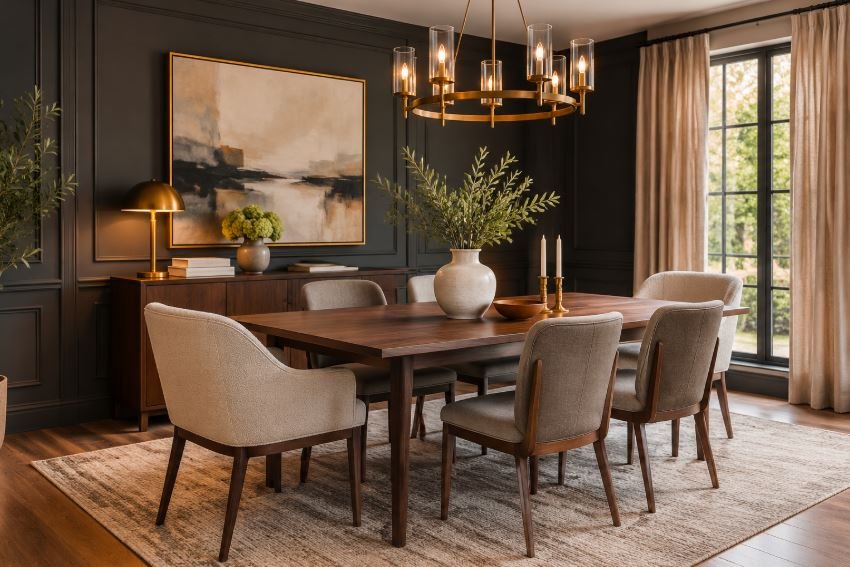
A centerpiece adds personality to the dining table, but it should not interfere with meals or conversation.
Low arrangements are usually more practical because people can see one another across the table.
Some attractive options include:
- A ceramic bowl with seasonal fruit.
- A small vase with fresh flowers.
- A wooden tray with candles.
- A sculptural decorative bowl.
- A simple arrangement of greenery.
For everyday use, choose something that can be moved easily when serving food.
Avoid tall arrangements that block sightlines or take up too much of the table’s usable surface.
20. Add Texture With Table Runners and Natural Fabrics
Textiles are an easy way to change the mood of a dining room without replacing furniture.
A linen table runner adds softness to a wooden table, while cotton napkins and textured placemats make everyday dining feel more considered.
Try combining:
- Linen table runners.
- Cotton napkins.
- Woven placemats.
- Soft upholstered chair cushions.
- Textured curtains.
The materials do not need to match exactly. They should simply share a similar color direction or feel.
Choose washable fabrics for a busy dining area, especially if children use the table regularly.
21. Bring Nature Indoors With Greenery
Plants can make a dining room feel more relaxed and connected to nature.
A taller indoor plant can fill an empty corner, while a small plant or fresh flowers can add color to a sideboard.
Choose plants according to the actual light conditions in the room rather than appearance alone.
If the dining area does not receive much natural light, consider suitable low-light plants or realistic artificial greenery.
Avoid placing large plants where they block walkways, cover windows, or make it difficult to pull out dining chairs.
22. Use Curtains to Soften the Dining Room
Curtains can make a dining room feel more finished by adding softness to the windows and connecting the room’s color palette.
Linen and cotton fabrics work well in relaxed interiors, while heavier fabrics can create a more formal appearance.
For a brighter dining area, consider light-filtering curtains that allow daylight to enter while providing some privacy.
For a polished result, think about:
- Curtain length.
- Fabric weight.
- Color coordination.
- Window size.
- The position of the dining furniture.
Getting the length and width right makes a noticeable difference to the finished look. Before choosing ready-made or custom panels, read this practical guide on how to measure for curtains so the fabric fits the window properly.
One safety detail matters in family homes: the U.S. Consumer Product Safety Commission recommends cordless window coverings where young children may be present. See its window covering cord safety guidance.
23. Combine Different Lighting Sources for a Comfortable Atmosphere
A single ceiling light may provide enough brightness, but it does not always create the most comfortable atmosphere.
Combining different light sources gives the room more flexibility.
For example, use a pendant above the table for focused lighting, wall sconces for additional warmth, and a lamp on a sideboard for a softer evening glow.
Warm-toned lighting can help create a relaxed dining atmosphere, particularly in rooms with natural wood and neutral fabrics.
The important thing is to avoid harsh lighting that makes the room feel more like a workspace than a place to enjoy meals.
24. Try Modern Organic Dining Room Decor
Modern organic design combines clean furniture shapes with natural materials and soft colors.
It is a good choice for people who want a modern dining room that still feels warm and comfortable.
The style often includes:
- Natural oak and walnut furniture.
- Rounded table and chair shapes.
- Linen upholstery.
- Stone or ceramic accessories.
- Warm neutral wall colors.
- Simple decorative lighting.
Avoid making every surface the same shade of beige. A little contrast from darker wood, black accents, or muted green helps the room feel more interesting.
25. Create a Relaxed Farmhouse Dining Room
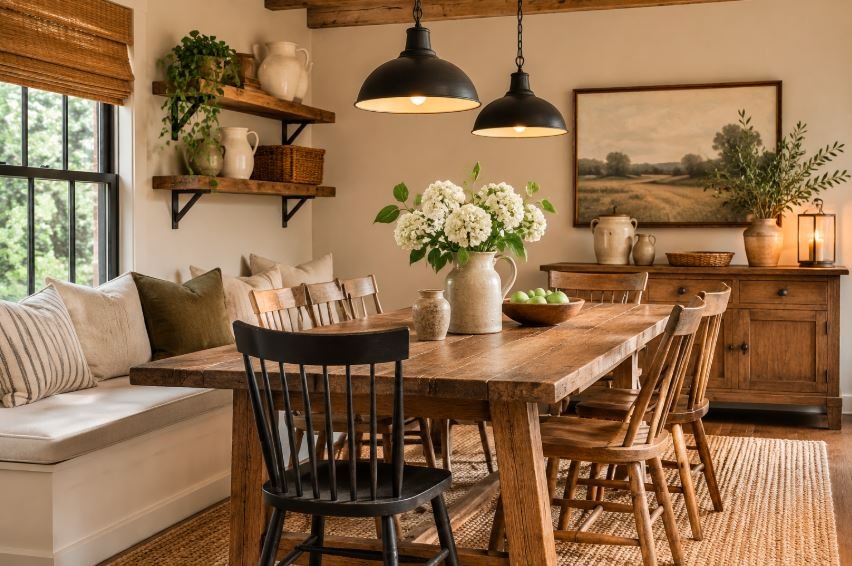
Farmhouse dining room decor works well for people who prefer a comfortable, slightly rustic interior.
A substantial wooden dining table can form the foundation of the room. Add simple chairs, natural fabrics, and a few vintage-inspired accessories.
Good design elements include:
- Reclaimed or distressed wood finishes.
- Black metal lighting.
- Neutral upholstered chairs.
- Woven baskets.
- Ceramic vases.
- Simple floral arrangements.
A modern farmhouse look should not feel like a collection of unrelated rustic decorations. Choose a few consistent materials and let the furniture do most of the work.
26. Keep Things Calm With Japandi Dining Room Decor
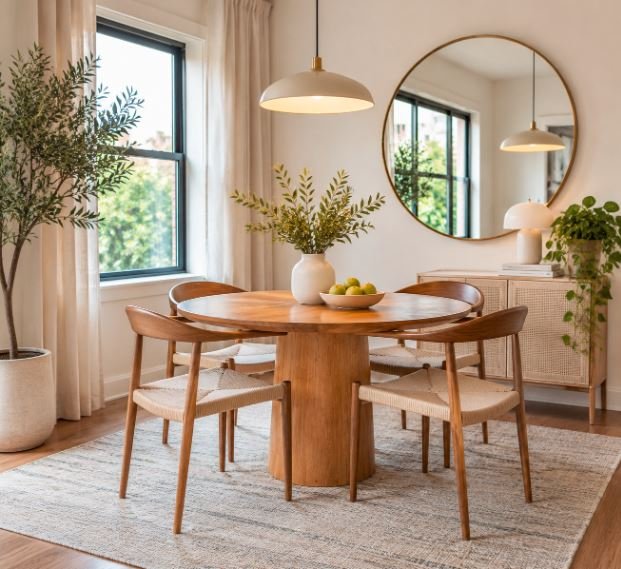
Japandi combines the simplicity of Japanese-inspired interiors with the warmth and practicality associated with Scandinavian design.
It is particularly suitable for dining rooms where a calm, uncluttered appearance is the main goal.
Focus on natural wood, simple furniture, soft lighting, and carefully selected accessories.
A low-profile wooden table, neutral upholstered chairs, and a single ceramic centerpiece can create the desired look without filling the room with decorations.
The key is restraint. Each item should have a clear purpose, whether practical or decorative.
How to Decorate a Dining Room Without Spending Too Much
A dining room makeover does not always require new furniture. Many improvements can be made by rearranging existing pieces and introducing a few affordable details.
Here is a practical way to approach it:
| Budget level | What to update | Expected effect |
| Very low | Rearrange furniture, reuse artwork, add a table runner | Fresh appearance |
| Low | Add cushions, plants, affordable wall art | More color and texture |
| Moderate | Update pendant light, rug, or curtains | Noticeable change |
| Higher | Replace dining chairs, add a sideboard, update wall finishes | More complete makeover |
Start with the part of the room that feels most unfinished.
If the walls look empty, artwork may make the biggest difference. If the room feels cold, textiles and warmer lighting may be more useful than buying another piece of furniture.
Before purchasing a large table or cabinet, measure the room, doorways, and walking routes. A little planning can prevent furniture from taking up more space than expected.
Common Decorating Mistakes That Can Make a Dining Room Feel Uncomfortable
Even attractive furniture can look out of place when the arrangement does not suit the room.
Watch out for these problems:
- Choosing a rug that is too small: Dining chairs may catch on its edges when pulled out.
- Hanging artwork too high: The wall arrangement can feel disconnected from the furniture.
- Using an oversized table: It may leave too little room for people to move comfortably.
- Adding too many accessories: Excessive decoration makes the room harder to maintain.
- Ignoring lighting: A beautiful dining table can look uninviting under harsh or poorly placed lighting.
- Mixing too many styles: Different design elements should share some common colors, materials, or shapes.
- Blocking natural light: Large furniture and heavy window treatments can make a small room feel darker.
- Choosing appearance over comfort: Dining chairs should support comfortable everyday use, not simply look attractive.
A well-decorated dining room should feel natural to use. If people have to move decorations before eating or struggle to pull out their chairs, the design needs another look.
Frequently Asked Questions About Dining Room Decor Ideas
1. How can I make my dining room look beautiful?
Start with a well-proportioned dining table, comfortable chairs, suitable lighting, and a coordinated color palette. Add one or two decorative features, such as artwork, a mirror, or a centerpiece. Keeping the room balanced is more effective than filling every available space with accessories.
2. What should I put on my dining room walls?
Large artwork, decorative mirrors, wallpaper, wall paneling, and carefully arranged shelves are all good options. Choose something that suits the room’s size and furniture. One strong focal point often looks better than several unrelated decorations.
3. How do I decorate a small dining room?
Choose compact furniture, light wall colors, and simple decorations. Round tables, slim chairs, mirrors, and wall-mounted storage can help make better use of limited space. Keep the main walking routes clear so the room remains comfortable.
4. What colors look best in a dining room?
Warm neutrals, beige, cream, olive green, terracotta, navy, and natural wood tones are popular choices. The best color depends on the room’s natural light, furniture finishes, and the atmosphere you want to create.
5. What is the best centerpiece for a dining table?
A low ceramic bowl, fresh flowers, a small plant, or a decorative tray can work well. Choose something that complements the table and leaves enough room for plates and serving dishes. Low arrangements are especially practical for everyday dining.
6. How can I make my dining room look expensive on a budget?
Focus on a few details that create a noticeable difference. Upgrade the lighting, add coordinated curtains, use attractive artwork, and style the table with simple accessories. Keeping furniture and decorative pieces well maintained also makes the room feel more polished.
7. How do I make an open-plan dining area look separate?
Use an area rug, pendant light, sideboard, or furniture arrangement to define the dining zone. Repeating colors and materials from nearby spaces will help the entire open-plan interior feel connected.
Bring Your Dining Room Together With the Right Details
A beautiful dining room is not about following every decorating trend or buying expensive furniture. It is about choosing elements that work together and suit the way the room is used.
Start with the dining table and available space, then build around them with suitable lighting, comfortable seating, balanced colors, and a few meaningful decorations. Small changes can have a noticeable effect, especially when they solve an existing problem.
Whether the goal is a modern dining area, a cozy farmhouse setting, or a simple apartment dining corner, the best dining room decor ideas are the ones that make everyday meals more comfortable while giving the home a personal touch.