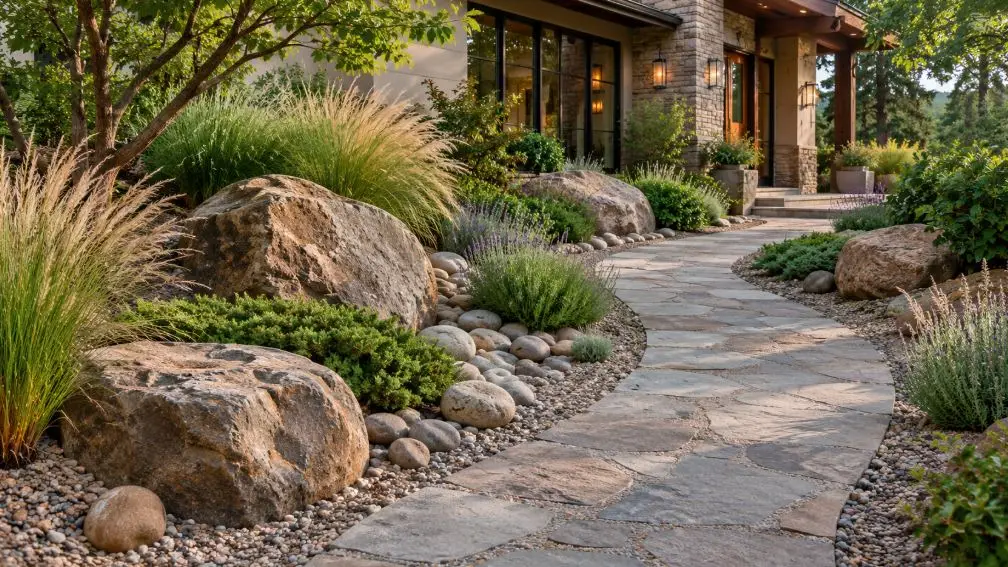
Rocks can do more for a yard than simply cover bare ground. They can define garden beds, create attractive pathways, frame plants, and add texture to spaces that feel unfinished. With the right materials, even a small outdoor area can have a neat, well-planned look.
The best part is the variety. Smooth river rocks bring a natural feel, gravel works well for paths, and large boulders can become striking garden features. You can also mix stones with flowering plants, ornamental grasses, and shrubs to keep the landscape from looking too bare.
Before choosing a design, think about your yard’s size, sunlight, soil, and drainage. If you are still planning the overall layout, take a look at these landscaping ideas for front yards, backyards, and pools for more inspiration.
Here are 25 rock landscaping ideas worth considering, along with practical tips to help you choose the right design.
25 Rock Landscaping Ideas for Different Outdoor Spaces
1. Create a River Rock Garden Bed
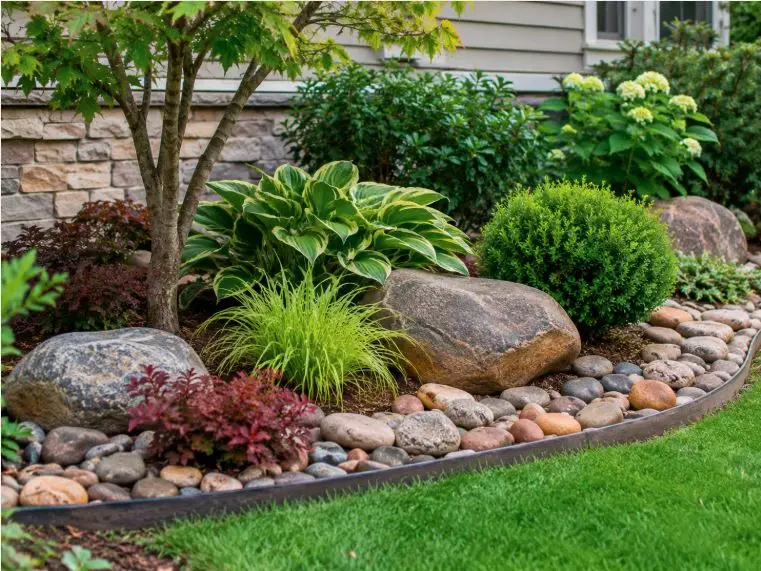
River rocks are a good choice when you want a garden bed to look natural without using too many decorative features. Their smooth surfaces and mixed colors pair well with green shrubs, ornamental grasses, and flowering plants.
Try using medium-sized stones around the edges and smaller pebbles between plants. Add one or two larger rocks to give the bed some structure. Keep the planting areas open so the stones do not crowd the roots.
This type of river rock landscaping looks attractive beside a walkway, along a foundation, or near a patio.
2. Build a Dry Creek Bed With River Stones
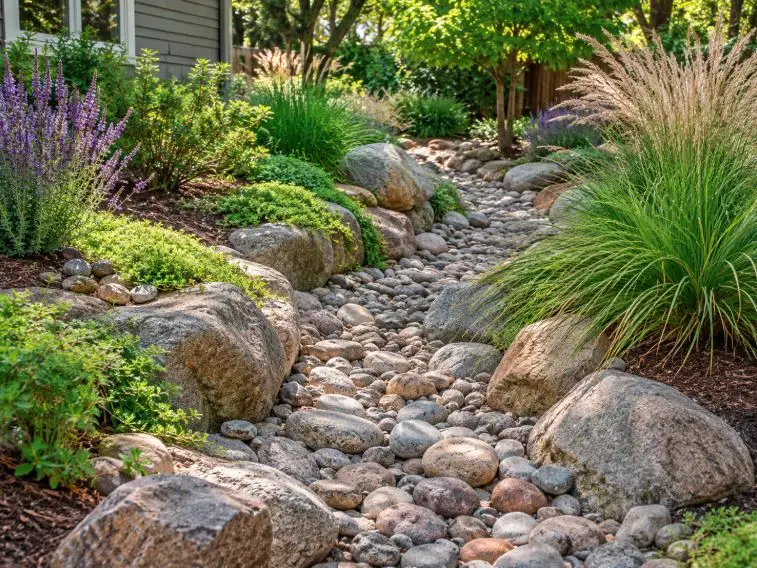
A dry creek bed adds the look of a natural stream without the need for running water. It is made with a curved channel filled with river rocks, gravel, and larger stones.
Start by marking a gentle curve through the yard. Place larger rocks along the sides and fill the middle with smaller stones. Ornamental grasses and low-growing plants can soften the edges.
A dry creek bed can also help direct surface water when it is designed correctly. Make sure water has a safe place to go. Never direct runoff toward your home’s foundation or a neighboring property.
3. Add a Pea Gravel Garden Path
A pea gravel path is a simple way to connect different parts of your garden. The small, rounded stones create a softer look than concrete and come in several natural colors.
First, mark the path and prepare a firm base. Add suitable edging to keep the gravel from spreading into nearby planting beds or lawns. You can also place flat stepping stones along the route for more stable footing.
Pea gravel is best for informal paths. For a frequently used walkway or an accessible route, a firmer surface may be more comfortable.
4. Use Large Boulders as Garden Features
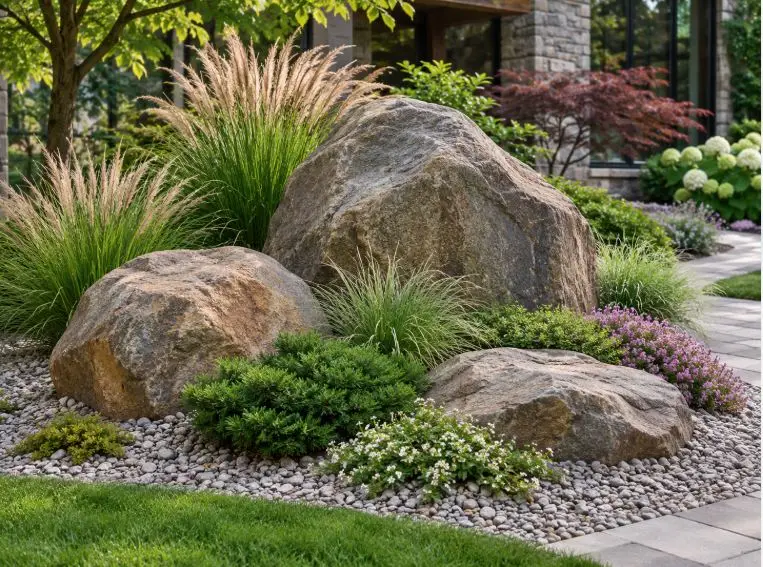
A few large boulders can give a garden more character than dozens of small decorative stones. Their natural shapes create contrast with grass, shrubs, and gravel.
Choose rocks that suit the size of your yard. A single large boulder may be enough for a small garden, while a larger space can handle a group of three or more.
Avoid lining them up like fence posts. Place them in an uneven arrangement and partially set suitable stones into the ground. Heavy boulders need secure placement, often with professional equipment.
5. Design a Garden With White Landscaping Rocks
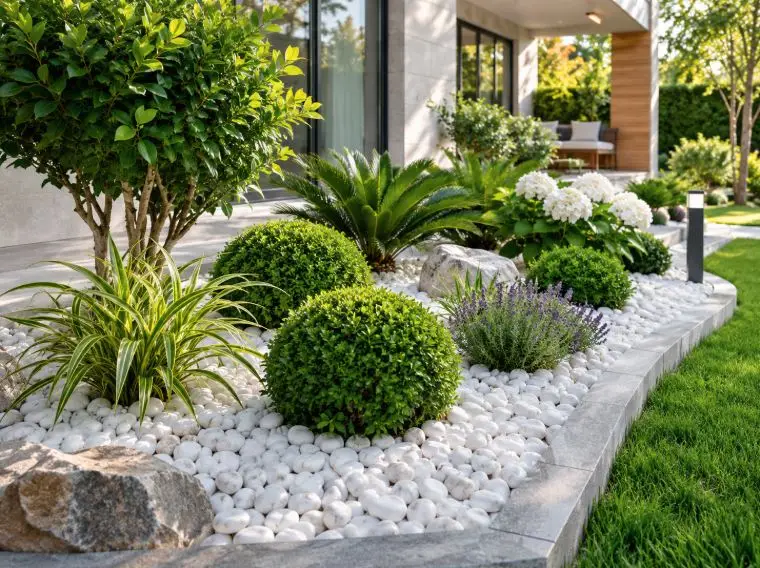
White landscaping rocks can brighten a garden and create a clean contrast against dark green foliage. They work particularly well in modern yards with simple planting arrangements.
Use white marble chips or decorative white pebbles around selected shrubs. A border made from concrete or natural stone can help keep the area neat.
White rocks are not suitable for every planting bed. They reflect light, which can affect nearby plants in hot, sunny locations. Check the growing needs of your plants before using them in exposed areas.
6. Use Black Lava Rocks for a Modern Look
Black lava rocks give garden beds a darker, more dramatic appearance. Their rough texture looks good beside green plants, light-colored paving, and neutral house exteriors.
Spread them around a small group of shrubs or use them in a defined decorative area. You can also combine them with larger natural stones to add variation.
Black lava rock landscaping is especially suitable for contemporary and desert-inspired gardens. Keep in mind that dark stones can become hot in direct sunlight, so choose plants that can handle the conditions.
7. Combine Flagstone and Gravel for a Natural Walkway
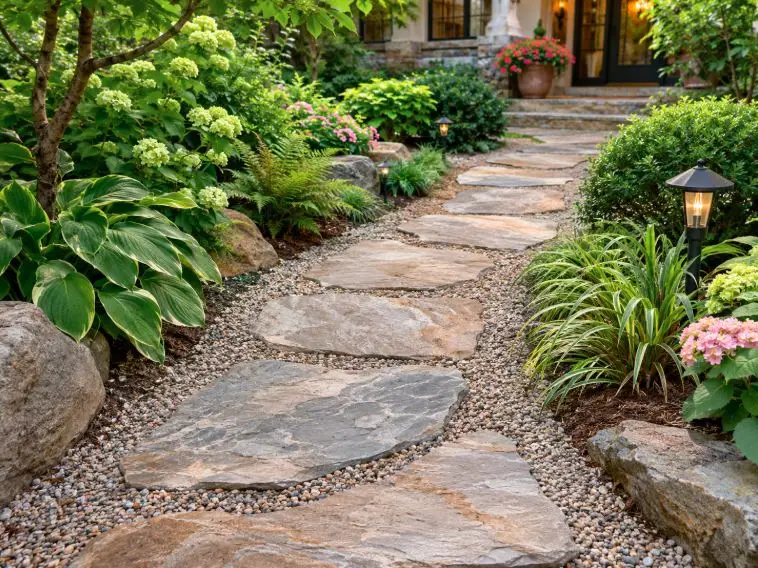
Flagstone and gravel make a practical combination for garden paths. The flat stones provide stepping surfaces, while gravel fills the gaps and gives the walkway a more relaxed appearance.
Choose flagstones with a similar thickness to reduce uneven edges. Leave comfortable spaces between them and use gravel that stays in place.
This design works well through flower gardens, beside patios, and along informal backyard paths. If people will use the walkway regularly, make sure the stones sit firmly and do not wobble.
8. Turn a Sloped Area Into a Rock Garden
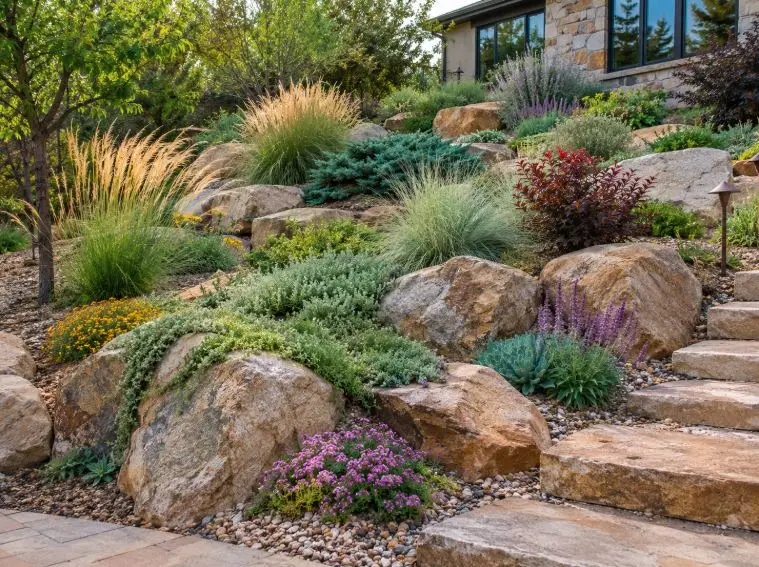
A sloped yard can be difficult to plant because rain may wash soil downhill. A rock garden can help break up the area and create separate planting pockets.
Place larger stones securely within the slope, then add smaller rocks and suitable ground cover plants. Ornamental grasses and low-growing perennials can soften the hard edges.
Colorado State University Extension recommends building rock gardens on suitable slopes or terraces, using well-drained soil and arranging stones in a natural way.
For steep or unstable slopes, get professional advice before moving soil or placing heavy rocks.
Before choosing plants and placing larger stones, review this rock garden planting guide from Colorado State University Extension for advice on drainage, stone placement, and suitable plants.
9. Plant Succulents Between Decorative Rocks
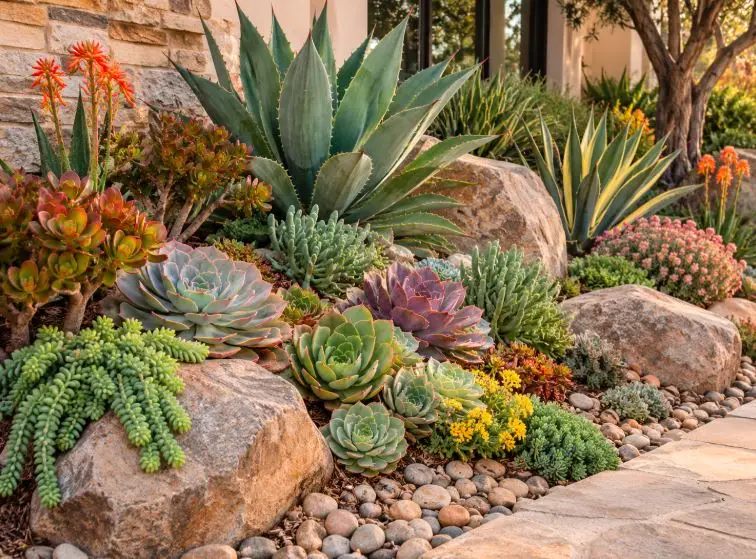
Succulents are a natural match for rock gardens. Their different shapes and colors add interest without needing a large number of plants.
Use varieties that suit your local climate and place them in well-drained soil. Leave enough room for them to spread, then fill selected gaps with small decorative pebbles.
Echeveria, sedum, and suitable agave varieties can work in the right conditions. However, not all succulents tolerate freezing temperatures or prolonged rain. Check their growing requirements before planting them outdoors.
10. Add Flowering Plants for More Color
A rock garden does not have to look plain or dry. Flowering plants can bring seasonal color and make the stones feel like part of a larger garden.
Plant suitable perennials in small soil pockets between larger rocks. Choose varieties with different flowering periods so the garden does not lose all its color at once.
Lavender and certain drought-tolerant flowering plants may suit sunny locations. For shaded areas, look for plants that naturally grow in lower light.
The important thing is to choose plants for the conditions they will actually receive.
11. Combine Ornamental Grasses With Gravel
Ornamental grasses add movement to a rock landscape. Their narrow leaves and soft shapes balance the harder appearance of stones.
Plant them in small groups and surround them with pea gravel or crushed stone. Leave enough room for each plant to reach its mature size.
This combination works well in modern gardens, open yard spaces, and areas with limited planting beds. Choose grass varieties that suit your climate and do not become too large for the space.
12. Create a Japanese-Inspired Zen Rock Garden
A Japanese-inspired rock garden uses simple materials and careful placement. Instead of filling the space with plants and decorations, the design focuses on a few well-positioned stones.
Use light-colored gravel or sand as the ground covering. Arrange several larger rocks as focal points and add a little greenery around the edges.
Raked patterns can make the gravel more interesting. Keep the design simple, with enough open space between features.
This style works particularly well in small courtyards and quiet garden corners.
13. Try a Desert-Style Rock Landscape
Desert landscaping uses gravel, stones, and plants suited to dry conditions. It can be a practical choice for areas where maintaining a traditional lawn is difficult.
Start with a suitable gravel surface and arrange larger boulders to create different heights. Add cacti, succulents, and drought-tolerant shrubs that can grow in your local climate.
Avoid making the entire yard one flat layer of stones. Different rock sizes and a few carefully placed plants will give the design more depth.
14. Build a Raised Rock Garden Bed
A raised rock garden bed creates a clear planting area and adds height to a flat yard. It can also help separate plants from a nearby walkway or lawn.
Use suitable natural stones or masonry blocks to build the border. Fill the bed with soil that matches the needs of your chosen plants, then arrange smaller rocks around the planting pockets.
For low decorative borders, a simple stone arrangement may work. Taller walls that hold back soil need proper structural design and drainage.
15. Add Stone Borders Around Flower Beds
Stone borders are useful when you want garden beds to look more organized. They separate planting areas from lawns, paths, and gravel surfaces.
Choose one main stone type and keep the border consistent. Larger stones can create a stronger edge, while smaller pebbles can fill gaps.
You can use this idea around shrubs, flower beds, and small ornamental gardens. Match the stone color with the home’s exterior for a more connected look.
16. Landscape Around Trees With Decorative Rocks
The area around a tree often becomes bare as grass struggles to grow beneath its branches. A carefully planned rock border can make that space look more finished.
Create a broad bed around the tree and use decorative stones along its outer edge. Low-growing plants can add color where sunlight and soil conditions allow.
Keep rocks, soil, and mulch away from the trunk. The root flare should remain visible, and the tree needs room for normal root growth.
A simple design is usually better than covering the entire root area with heavy stones.
17. Create a Rock Border Along the Driveway
A narrow rock border can make a driveway look more finished while separating it from the rest of the yard.
Use crushed stone, river rocks, or decorative gravel along the edges. Add a few low-growing plants if there is enough space.
Choose stones that are large enough to stay in place. Loose gravel can spread onto the driving surface and create a maintenance problem.
For a neat result, install suitable edging before adding the stones.
18. Make a Narrow Side Yard More Useful
Side yards are often left unfinished because they are too narrow for large garden beds. Gravel and stepping stones can turn these spaces into simple, useful walkways.
Use a consistent gravel color and place flat stones along the route. Small shrubs or shade-tolerant plants can soften the edges without blocking access.
Keep utility connections, outdoor taps, and equipment areas easy to reach. A narrow side yard should remain practical, not become difficult to maintain.
19. Create a Gravel Seating Area Beside the Patio
A gravel seating area can extend your outdoor living space without covering the entire yard with paving.
Mark out a clear area, prepare a firm base, and add edging to contain the gravel. Place weather-resistant chairs and a small table on a stable surface.
Flat stepping stones can connect the seating area to the main patio. Add a few containers or nearby plants to make the space feel more welcoming.
If the seating area is beside a swimming pool, think about the walking surface, drainage, and furniture layout. These pool deck ideas for comfort, materials, and safety can help you plan the area around the water.
20. Protect the Ground Beneath a Downspout With Stones
Water falling from a roof downspout can leave muddy patches and wash away soil. A small stone area can help protect the ground where the water hits.
Use washed river stones or larger gravel to create a splash area. Keep the stones within a defined border and check where the water flows afterward.
The goal is to move water away safely, not trap it beside the house. If the downspout causes repeated drainage problems, consider a properly designed drainage solution.
21. Design a Small Courtyard With Gravel and Stone
A small courtyard can feel crowded when it has too many different materials. A limited selection of gravel, stepping stones, and plants often works better.
Use gravel across the main open area and place flat stones where people need to walk. Add a few larger rocks as focal points, with container plants around the edges.
Warm beige stones create a softer appearance, while gray or dark gravel can suit a modern home.
Keep the layout open so the courtyard remains easy to use.
22. Add a Natural Stone Retaining Wall
A stone retaining wall can create different levels in a sloped garden. It also gives you a defined space for planting shrubs, flowers, or ground cover.
Natural stone works well with gravel and other rock landscaping materials. Choose a finish that matches the rest of the yard.
However, a retaining wall must do more than look attractive. Its height, soil pressure, foundation, and drainage all affect its stability. Larger walls should be designed and built by qualified professionals.
23. Add a Small Rock Water Feature
A water feature surrounded by stones can become the main feature of a garden. A small recirculating fountain is often easier to fit into a residential yard than a large pond.
Place river rocks around the base to blend the fountain into the landscape. Add a few plants nearby, but leave enough space to reach the pump for cleaning and maintenance.
Outdoor electrical connections need proper protection and installation. Use a qualified professional when electrical work is required.
24. Mix Decorative Rocks With Wood Mulch
You do not have to choose between rocks and mulch for the entire yard. Both materials can work together when each has a clear purpose.
Use decorative stones along paths, under downspouts, or around selected garden features. Keep organic mulch around shrubs and planting beds where soil improvement and moisture retention matter.
Use edging to separate the two materials. Without a clear boundary, gravel can mix with mulch and make the garden look untidy.
25. Create a Boulder Garden Island
A boulder garden island is a separate planting bed surrounded by lawn, gravel, or another open surface.
Place a few large stones in an uneven group and add smaller rocks around them. Fill the remaining space with ornamental grasses, low shrubs, or flowering plants.
This arrangement works particularly well in a large open yard that needs one clear focal point. In a smaller garden, use fewer stones to avoid making the area feel crowded.
Which Rocks Are Best for Landscaping?
Not every type of stone works for every project. Some are better for pathways, while others are mainly used for decoration.
Here is a quick comparison of common landscaping rocks.
| Rock Type | What It Looks Like | Common Uses |
| River rocks | Smooth and rounded | Garden beds, dry creek beds, borders |
| Pea gravel | Small, rounded stones | Informal paths and seating areas |
| Crushed stone | Angular pieces | Path bases and compacted surfaces |
| Lava rocks | Rough and porous | Decorative garden beds |
| Flagstone | Flat, irregular slabs | Walkways and patios |
| Decomposed granite | Fine, earthy material | Garden paths and outdoor surfaces |
| Limestone | Usually light-colored | Borders and stone features |
| Marble chips | Bright, decorative pieces | Accent areas and modern gardens |
| Slate | Flat with layered texture | Edging and pathways |
| Large boulders | Heavy, natural stones | Focal points and rock gardens |
River Rocks or Pea Gravel: Which Should You Choose?
Both materials have rounded shapes, but their uses are different.
River rocks are generally larger. They work well in dry creek beds, decorative borders, and garden beds where you want a natural stone appearance.
Pea gravel is smaller and can fill narrow spaces between stepping stones. It is also used in informal seating areas and garden paths.
For a decorative creek bed, river rocks are usually the better choice. For smaller gaps and ground coverings, pea gravel may be easier to work with.
How to Choose the Right Rock Landscaping Design
A good design should suit your yard rather than simply copy a picture. Consider these points before buying materials.
Look at the size of your yard. Large boulders can overwhelm a small garden. Smaller stones and a limited color palette may work better in compact spaces.
Match the stones to your home. Beige and brown stones suit many traditional exteriors. White, gray, and black stones can complement more modern designs.
Check the sunlight. Dark stones can heat up in direct sun. Light stones may reflect more sunlight onto nearby plants. Choose materials and plants that work together.
Think about drainage. Look at where rainwater collects and where it flows. Decorative rocks will not automatically solve a drainage problem.
Avoid mixing too many stone types. A garden often looks more organized when you use one main stone and one complementary material.
Colorado State University Extension recommends using rocks of a similar geological type and providing good drainage when building a rock garden. Its guidance also notes that rock gardens need regular weed control.
How to Install a Rock Garden
You do not need to start with a complicated design. A simple layout and proper preparation can make the installation much easier.
1. Mark Out the Area
Use a garden hose or rope to mark the shape of the bed. Try a few different curves before deciding where the stones and plants will go.
2. Remove Weeds and Prepare the Ground
Clear existing weeds, grass, and debris. Level the area where necessary and prepare the soil for the plants you plan to use.
If the ground slopes, check for erosion and water movement before placing heavy stones.
3. Decide Whether Landscape Fabric Is Necessary
Landscape fabric can separate decorative stones from the soil, but it is not essential for every rock garden.
Weeds can still grow in debris that collects on top of the fabric. Plant roots may also grow through it, making future changes difficult.
For planting beds, consider how the fabric will affect the plants you want to grow. Avoid solid plastic beneath planted areas because it can prevent water from moving through the soil.
4. Place the Large Stones First
Position the larger rocks before adding gravel or small pebbles. This gives you a better idea of how the finished garden will look.
For a natural arrangement, set suitable stones partly into the ground instead of leaving them sitting on the surface. Large boulders may need professional placement.
5. Add Gravel and Smaller Rocks
Fill the open areas with your chosen decorative stones. Spread them evenly and use edging where needed to stop them from spreading.
Do not pile stones against plant stems or tree trunks.
6. Plant and Finish the Garden
Add plants to the prepared soil pockets and check that they have enough space to grow.
Water them according to their needs. Once everything is in place, check the garden after rainfall to make sure water drains as intended.
Rock Landscaping vs. Organic Mulch
Rocks and organic mulch can both improve the appearance of a garden, but they serve different purposes.
| Feature | Landscaping Rocks | Organic Mulch |
| Durability | Lasts for many years | Breaks down over time |
| Soil improvement | Does not add organic matter | Adds organic matter as it decomposes |
| Water retention | Does not provide the same moisture benefits as organic mulch | Helps reduce moisture loss |
| Weed control | Weeds can grow in accumulated debris | Helps reduce weed growth when applied correctly |
| Heat | Can become hot in direct sunlight | Helps moderate soil temperature |
| Maintenance | Needs cleaning and occasional weeding | Needs periodic replacement |
| Common uses | Paths, dry creek beds, decorative areas | Shrubs, trees, and planting beds |
University of Florida IFAS explains the benefits and limitations of rock mulch in garden landscapes, including where decorative stones are most useful.
For many planted beds, organic mulch is the more useful choice. Rocks are better suited to paths, dry creek beds, and selected decorative areas.
The University of Florida’s IFAS Gardening Solutions recommends using rock mulch sparingly around plants and reserving it mainly for pathways, dry creek beds, and downspouts. Conditions vary by region, so consider local gardening advice before choosing a material.
How to Maintain a Rock Garden
A rock garden does not need frequent watering or regular replacement of decorative stones. However, it still needs occasional attention.
A few simple tasks will help keep it tidy:
- Remove fallen leaves before they collect between stones.
- Pull weeds while they are still small.
- Move stones back into place if they spread.
- Check drainage areas after heavy rain.
- Trim plants before they cover nearby stones or paths.
- Clear loose gravel from walkways and driveways.
- Check that tree trunks and plant stems remain free of piled stones.
Do not assume that a layer of rocks will stop weeds permanently. Seeds can settle in dust and leaves that collect between the stones. Regular cleaning makes the job easier.
Rock Landscaping Mistakes to Avoid
A few common mistakes can make a rock garden harder to maintain.
Using too many colors: Several unrelated stone colors can make a small garden look busy. Choose a simple combination.
Choosing plants without checking their needs: Some plants struggle with heat, reflected light, or poor drainage. Match the plants to the location.
Covering every garden bed with rocks: Stones do not replace the benefits of organic mulch in many planted areas.
Ignoring water movement: A decorative bed should not send rainwater toward the house or a neighbor’s property.
Leaving large boulders unsecured: Heavy rocks need a stable position. Poor placement can create a safety risk.
Using loose gravel on every walkway: Pea gravel can shift underfoot. Use a firmer surface where people need stable, regular access.
Frequently Asked Questions About Rock Landscaping Ideas
What are the best rocks for landscaping?
River rocks, pea gravel, crushed stone, flagstone, lava rocks, and large boulders are common choices. The right material depends on where you plan to use it and the look you want.
What is the cheapest rock for landscaping?
Locally available crushed stone and pea gravel are often affordable choices. However, delivery, preparation, and installation can change the total cost. Compare local suppliers before ordering.
What should I put under landscaping rocks?
The right base depends on the project. A compacted base may be needed for pathways, while a separation layer may help keep decorative stones from mixing with the soil. Landscape fabric is not required for every garden bed.
Are rocks better than mulch for landscaping?
Neither is better in every situation. Rocks last longer and work well for pathways and decorative features. Organic mulch is often more useful around plants because it helps retain moisture and adds organic matter as it breaks down.
How do you stop weeds from growing through landscaping rocks?
Remove existing weeds before installation and keep leaves and debris from collecting between stones. Landscape fabric may help in some situations, but it will not prevent every weed from growing.
How deep should landscaping rocks be?
The required depth depends on the stone size and how the area will be used. A decorative bed and a gravel pathway need different preparation. Follow the supplier’s installation guidance for the material you choose.
What plants grow well in rock gardens?
Suitable plants may include succulents, sedum, ornamental grasses, lavender, alpine plants, and drought-tolerant perennials. The best choices depend on sunlight, soil, rainfall, and local temperatures.
Choose a Rock Design That Fits Your Yard
A successful rock landscape does not need dozens of materials or complicated features. A simple river rock bed, a gravel walkway, or a few well-placed boulders can give an outdoor area a more finished look.
Start with the part of the yard that needs attention. Choose stones that suit the space, prepare the ground properly, and add plants that can grow in the available conditions.
Most importantly, use rocks where they serve a purpose. When the materials, plants, and layout work together, the result will look good without making the garden harder to care for.