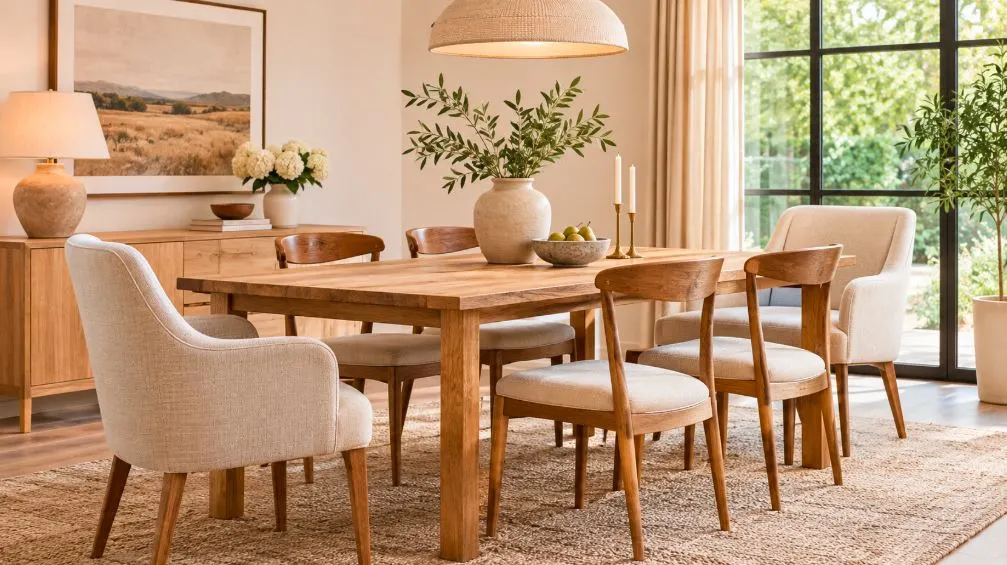
Dining chairs can look beautiful in a furniture showroom but feel completely different once you bring them home. Some are too wide to fit comfortably around the table, while others become uncomfortable before dinner is even finished. Materials, seat height, back support, and cleaning requirements all make a difference.
The best dining chairs are comfortable enough for everyday meals, proportionate to your dining table, and practical for the people using them. Upholstered chairs offer softness for longer dinners, solid wood designs suit busy households, and slim armless chairs help make smaller dining rooms easier to navigate.
Whether you are furnishing a new home, updating an existing dining room, or replacing an uncomfortable set of chairs, these options will help you find a balance between comfort, appearance, durability, and budget.
Which Dining Chairs Are Best for Your Home?
The right dining chair depends on how you use your dining space. A household with young children has different needs from a couple who regularly hosts dinner parties.
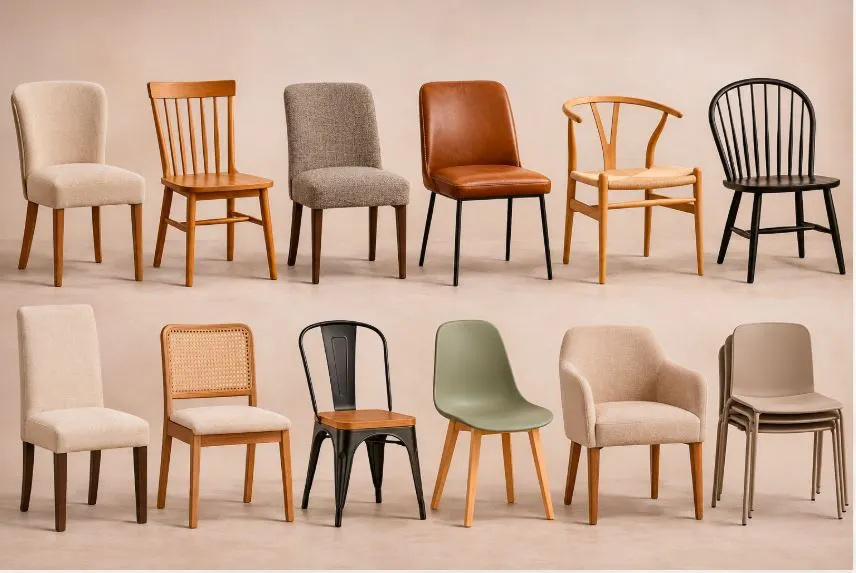
Use this comparison to narrow down your options before shopping.
| Dining Chair Type | Best For | Main Advantage | Potential Drawback |
| Upholstered chairs | Long meals and entertaining | Soft, cushioned seating | Requires more cleaning |
| Solid wood chairs | Everyday family dining | Durability and timeless style | Hard seating surface |
| Performance fabric chairs | Busy households | Easier stain management | Can cost more |
| Leather chairs | Modern and formal dining | Easy routine cleaning | May scratch |
| Wishbone chairs | Scandinavian interiors | Light, open appearance | Woven seats need care |
| Windsor chairs | Traditional and farmhouse homes | Versatile wooden design | Limited cushioning |
| Parsons chairs | Elegant dining rooms | Supportive upholstered design | Larger visual footprint |
| Cane-back chairs | Light and natural interiors | Airy appearance | Delicate woven material |
| Metal chairs | Industrial and casual spaces | Practical construction | Can feel cold |
| Molded plastic chairs | Small homes and families | Lightweight and easy to clean | Comfort varies |
| Dining armchairs | Relaxed, extended meals | Arm and upper-body support | Requires more space |
| Stackable chairs | Apartments and occasional guests | Convenient storage | Often less cushioned |
These recommendations compare chair types rather than specific branded products. Comfort and construction quality can vary considerably between individual models.
12 Best Types of Dining Chairs to Consider
1. Upholstered Dining Chairs – Best for Overall Comfort
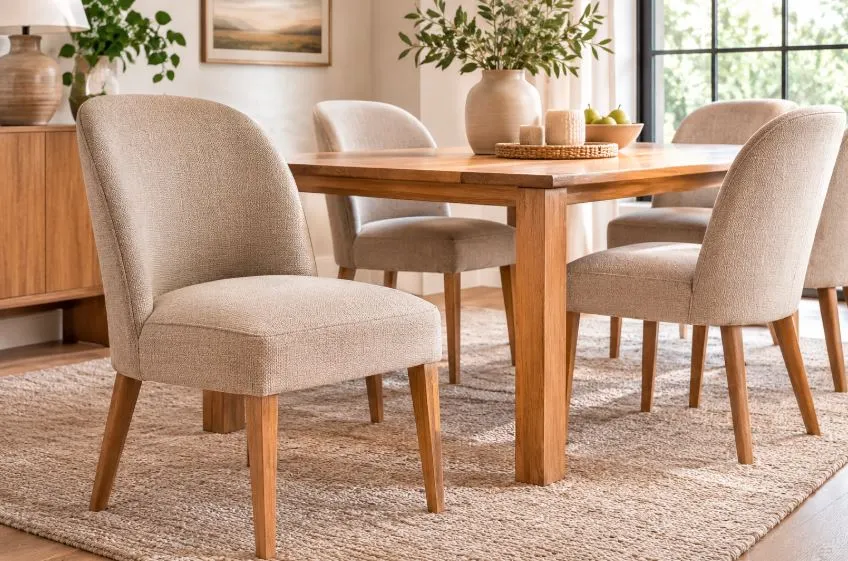
Upholstered dining chairs are a strong choice for households that spend more time around the table than simply eating meals.
A padded seat and supportive backrest make extended dinners, family conversations, and board games more comfortable. Upholstery also introduces softness into rooms filled with hard surfaces such as wooden tables, tile floors, and glass.
Look for a seat that feels supportive rather than excessively soft. Deep cushioning that sinks too far can make it difficult to maintain a comfortable dining position.
Neutral fabrics such as beige, oatmeal, taupe, and warm gray work well with many interior styles. Darker fabrics and subtle patterns can help disguise everyday marks.
The main drawback is maintenance. Ordinary fabric upholstery may absorb spills and collect dust, making it less suitable for households that need quick, frequent cleaning.
Best for: Comfortable everyday seating, formal dining rooms, and entertaining.
2. Solid Wood Dining Chairs – Best for Everyday Durability
Solid wood dining chairs are a practical option for households looking for furniture that can remain useful as decorating styles change.
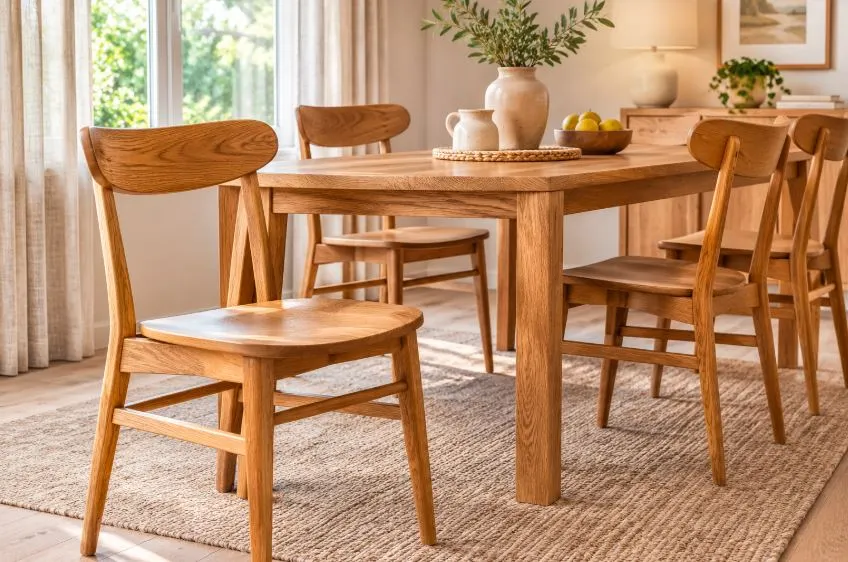
Oak, rubberwood, beech, walnut, and other furniture woods offer different appearances and price points. However, the quality of the joints, construction, and finish matters just as much as the type of wood.
Wooden chairs are generally easier to clean than fully upholstered designs. They also work well with farmhouse, traditional, rustic, Scandinavian, and modern dining rooms.
For better comfort, choose a chair with a gently curved backrest and a shaped seat rather than a completely flat surface.
A removable seat cushion can make wooden dining chairs more comfortable without committing to permanent upholstery.
Best for: Family dining rooms, kitchen tables, and long-term everyday use.
3. Performance Fabric Dining Chairs – Best for Families
Performance fabric dining chairs offer a useful middle ground between the comfort of upholstery and the practical needs of a busy household.
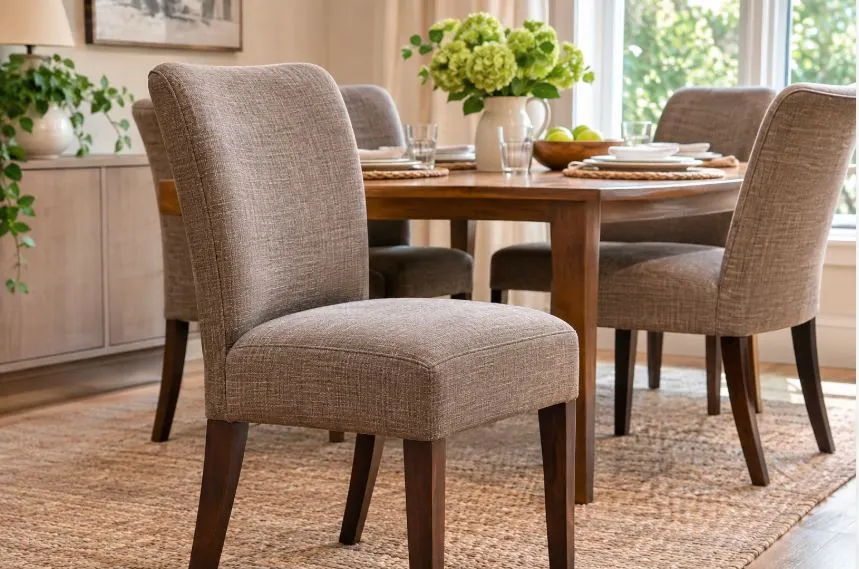
These fabrics are designed with properties such as stain resistance, durability, or easier cleaning. The exact benefits depend on the manufacturer and fabric type.
They are particularly worth considering for homes with children, pets, or frequent dinner guests.
Before purchasing, check whether the fabric can be cleaned with water-based products, whether the covers are removable, and what the manufacturer recommends for treating spills.
Avoid assuming that stain-resistant fabric is completely waterproof or stain-proof.
A tightly woven fabric with a subtle texture can also be more practical than a loose, heavily textured weave that easily traps crumbs.
Best for: Families who want comfortable dining chairs without demanding maintenance.
4. Leather Dining Chairs – Best for Easy-Care Elegance
Leather dining chairs bring warmth and character to a dining room without introducing thick fabric upholstery.
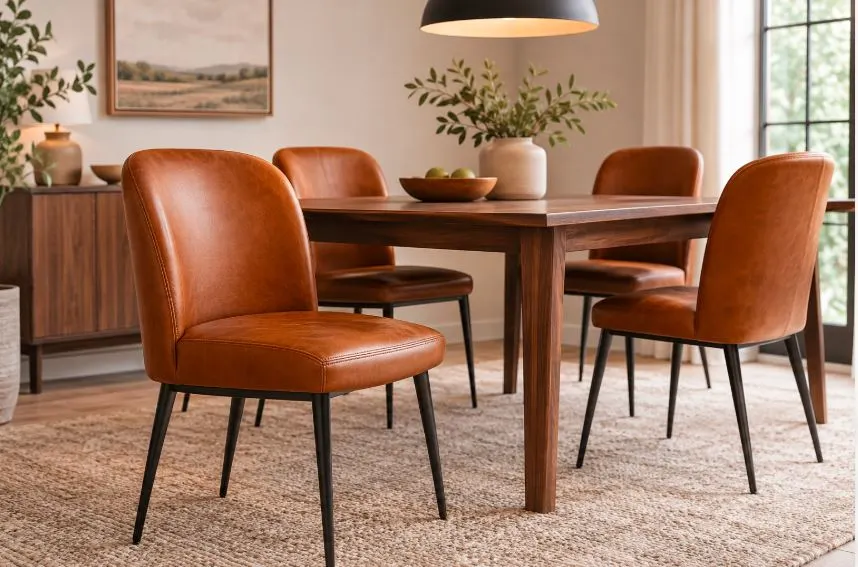
Brown, tan, cognac, and black leather pair particularly well with wooden tables, black metal frames, and modern interiors.
Finished leather can be relatively simple to wipe clean, although cleaning requirements differ between leather types. More absorbent leather finishes may show water marks, oils, or stains.
Faux leather is often a more affordable alternative, but quality varies. Lower-quality coverings may crack or peel over time.
Homes with pets should also consider scratches, especially on smooth leather surfaces.
Choose a chair with a comfortable back shape and sufficient seat padding rather than focusing entirely on the upholstery material.
Best for: Modern dining rooms, contemporary interiors, and adults who prefer easy routine cleaning.
5. Wishbone Dining Chairs – Best for Scandinavian Interiors
Wishbone chairs are recognizable by their curved wooden frames, open backs, and distinctive Y-shaped back support.
Their woven seats and slim profiles create a relaxed appearance that works especially well in Scandinavian, Japandi, minimalist, and natural interiors.
Unlike bulky upholstered chairs, wishbone designs allow more of the surrounding room to remain visible. This can help a dining area feel less crowded.
The woven seat has a different feel from a padded cushion, so comfort depends on its construction and the person using it.
Food spills can also be more difficult to remove from woven paper cord than from a smooth wooden or plastic seat.
Check the full width of the curved arms before buying. Some wishbone chairs need more space around the table than their lightweight appearance suggests.
Best for: Natural interiors, minimalist dining spaces, and relaxed contemporary homes.
6. Windsor Dining Chairs – Best for Classic and Farmhouse Style
Windsor dining chairs feature wooden seats and backs made with slender vertical spindles.
Their simple construction and recognizable shape make them suitable for both traditional and modern farmhouse dining rooms.
Black Windsor chairs can create contrast around a natural oak table, while painted white or muted green designs bring a softer country-inspired appearance.
The open spindle back helps maintain a sense of space, especially compared with large upholstered chairs.
Look for a comfortable seat shape, smooth finishes, and stable joints. Some inexpensive versions may feel rigid or become loose with regular use.
Windsor chairs are also easy to update visually with removable cushions or a different table finish.
Best for: Farmhouse dining rooms, traditional homes, breakfast areas, and casual family dining.
7. Parsons Dining Chairs – Best for Formal Dining Rooms
Parsons dining chairs typically feature straight lines, an upholstered seat, and a relatively tall upholstered back.
Their clean silhouette makes them suitable for formal dining rooms without requiring ornate furniture.
A rectangular dining table paired with matching Parsons chairs can create an orderly, elegant appearance. Fabric upholstery also provides an opportunity to introduce color and texture into an otherwise neutral room.
Many Parsons designs offer comfortable back support, but seat firmness and dimensions vary.
The taller, solid back can make a small dining area feel visually heavier. For compact rooms, consider a narrower version or a chair with a lower backrest.
Best for: Formal dining rooms, transitional interiors, and coordinated furniture arrangements.
8. Cane-Back Dining Chairs – Best for an Airy, Natural Look
Cane-back chairs combine a solid frame with an open woven backrest.
The natural texture works beautifully in coastal, bohemian, French-inspired, and organic modern dining rooms.
Because the backrest allows light and sightlines to pass through, cane chairs can appear less bulky than fully upholstered designs.
A cushioned seat paired with a cane back is a useful combination for readers who want softness without a visually heavy chair.
Natural cane requires appropriate care. It can be damaged by excessive moisture, rough handling, or prolonged exposure to unsuitable conditions.
Inspect the weaving and frame connections before buying, particularly when purchasing secondhand furniture.
Best for: Light-filled dining rooms, natural interior styles, and smaller spaces that need visual openness.
9. Metal Dining Chairs – Best for Casual and Industrial Spaces
Metal dining chairs suit industrial interiors, casual kitchens, and households that prefer straightforward furniture.
Powder-coated steel and other suitable metal frames can provide durable everyday seating when properly constructed.
Slim frames often take up less visual space than thick wooden legs or fully upholstered bases. Some metal chairs are also designed to stack.
However, metal seats can feel firm and cool, especially during colder months.
A wooden seat or removable cushion can improve comfort while preserving the simple appearance of the frame.
Check that the legs have suitable protective feet. Bare metal legs may scratch certain flooring materials.
Best for: Industrial dining rooms, casual kitchens, and practical everyday seating.
10. Molded Plastic Dining Chairs – Best for Small Homes and Easy Cleaning
Molded plastic chairs often feature smooth surfaces and curved seat shapes, making them a convenient option for busy households.
Polypropylene and other furniture-grade plastics are commonly used in these designs. They are available in a wide range of colors and frame styles.
Their main advantage is convenience. Many can be wiped clean easily and moved without much effort.
A well-shaped molded seat may offer better comfort than a poorly designed upholstered chair. Pay attention to the curve of the backrest, seat depth, and front seat edge.
Quality matters. Thin or poorly supported plastic may feel unstable, while unsuitable exposure to sunlight can affect certain finishes.
Choose models intended for regular dining use and check their stated weight capacity.
Best for: Apartments, families with children, breakfast nooks, and contemporary dining spaces.
11. Dining Armchairs – Best for Long Meals
Dining chairs with arms provide a more relaxed seating position and can offer useful support when sitting down or standing up.
They are particularly attractive at the ends of a rectangular dining table, where their wider shape creates a natural focal point.
An upholstered dining armchair can also make a dining room feel more inviting without requiring a separate lounge area.
The main limitation is space. Armchairs often need more room than armless dining chairs, and the armrests may prevent them from sliding underneath the tabletop.
Measure the armrest height and compare it with the lowest part of the table before ordering.
A practical arrangement is to use armchairs at the two ends of the table and slimmer side chairs along the remaining edges.
Best for: Spacious dining rooms, extended meals, and people who appreciate arm support.
12. Stackable Dining Chairs – Best for Flexible Seating
Stackable dining chairs are especially useful when the number of people using the dining table changes regularly.
They allow extra seating to remain available without permanently occupying valuable floor space.
This makes them suitable for apartments, smaller homes, and households that occasionally host larger gatherings.
Stackable chairs are available in wood, metal, plastic, and mixed-material designs. Some include upholstered seats, although bulky padding may reduce stacking convenience.
Check the manufacturer’s recommended stacking limit and whether protective spacers prevent the chairs from scratching each other.
A small collection of matching stackable chairs can also provide extra seating in other parts of the home.
Best for: Small dining rooms, rental homes, occasional guests, and multifunctional spaces.
How to Choose the Right Dining Chair Size
A dining chair can have the perfect color and material but still be uncomfortable if its dimensions do not match the table.
Measure your existing furniture before comparing designs.
Seat Height and Table Height
Seat height is the distance from the floor to the surface where you sit. It is different from the total height of the chair, which includes the backrest.
Use these approximate measurements as a starting point.
| Table Type | Typical Table Height | Suitable Seat Height |
| Standard dining table | 28–30 inches | 17–19 inches |
| Counter-height table | 34–36 inches | 24–26 inches |
| Bar-height table | 40–42 inches | 28–30 inches |
These ranges are general guides rather than fixed requirements. The best combination depends on the actual table construction, chair cushioning, and the user’s height.
IKEA’s dining chair size guide provides additional guidance on typical seat heights and under-table space.
For a standard dining table, a difference of roughly 10–12 inches (25–30 cm) between the chair seat and tabletop is a useful starting point.
Remember to measure the actual space beneath the table as well. A thick tabletop or a deep apron — the supporting frame underneath the tabletop — can reduce available knee room.
Chair Width and Spacing
Allow approximately 24 inches (61 cm) of table edge per person as an initial seating estimate. Wider chairs and armchairs may require more room.
Always measure the usable distance between the table legs rather than relying only on the overall tabletop length.
For example, a 60-inch table might appear large enough for three chairs along one side. However, three 20-inch-wide chairs would already use the entire length before accounting for gaps or table legs.
Two chairs may provide a much more comfortable arrangement.
Space Behind Dining Chairs
Where possible, aim for around 36 inches (91 cm) between the table edge and surrounding walls or furniture. A busy walkway behind seated diners may need additional room.
Smaller dining areas sometimes require compromises, but chairs should still be easy to pull out without hitting another piece of furniture.
Before ordering a set, follow these practical steps for measuring a room for furniture to check both furniture dimensions and available walking space.
What Makes a Dining Chair Comfortable?
A soft cushion alone does not make a dining chair comfortable. The seat, backrest, and overall proportions need to work together.
A comfortable dining chair should allow the feet to rest securely on the floor while providing enough support for the back.
Pay particular attention to the following features:
- Seat depth: The seat should support the thighs without pressing against the back of the knees.
- Backrest shape: A gentle curve can feel more supportive than a completely straight surface.
- Seat cushioning: Medium-firm cushioning often provides a better balance between softness and support.
- Front seat edge: Rounded edges may reduce uncomfortable pressure against the legs.
- Frame stability: The chair should not wobble or flex unexpectedly during normal use.
- Armrest position: Arms should support a relaxed posture without forcing the shoulders upward.
If possible, test a chair for longer than a few seconds before purchasing.
For online orders, review the full dimensions, customer comments about comfort, and return policy. Buying one sample chair before committing to a large set can help avoid an expensive mistake.
Best Dining Chair Materials for Everyday Use
Material affects more than appearance. It determines how much cleaning, maintenance, and care your dining furniture may need.
| Material | Comfort | Cleaning and Maintenance | Suitable For |
| Solid wood | Moderate without cushions | Generally simple with suitable finishes | Everyday dining |
| Fabric upholstery | Usually soft | Regular vacuuming and spill care | Formal dining and entertaining |
| Performance fabric | Usually soft | Depends on fabric treatment and care instructions | Family homes |
| Finished leather | Moderate to high | Routine wiping with suitable products | Modern interiors |
| Faux leather | Moderate to high | Often easy to wipe | Budget-conscious households |
| Metal | Firm without cushions | Generally straightforward | Casual and industrial rooms |
| Molded plastic | Depends on seat shape | Usually easy to clean | Small homes and families |
| Cane and woven cord | Depends on construction | Gentle cleaning required | Natural and airy interiors |
For a busy household, a smooth wooden, plastic, or suitable finished leather seat can make everyday cleanup easier.
If comfort matters more than cleaning convenience, consider upholstered chairs with removable covers or a fabric specifically designed for frequent use.
Best Dining Chairs for Small Spaces
Small dining rooms benefit from chairs that save both physical and visual space.
Armless side chairs are often a better starting point than large dining armchairs. They can usually fit closer together and slide farther beneath compatible tables.
Open-back designs, slender legs, cane panels, and simple wooden frames allow more of the room to remain visible.
A round pedestal dining table can also work well with compact chairs because there are fewer table legs competing for space near the seats.
For especially small apartments, consider keeping only the number of chairs needed every day and storing additional stackable seating elsewhere.
Avoid choosing a smaller chair purely for its dimensions. A narrow seat that feels uncomfortable defeats the purpose of creating a useful dining area.
The goal is to find furniture that fits without making everyday meals feel cramped.
How to Match Dining Chairs With Your Table
Dining chairs do not need to match the table perfectly. A balanced combination often creates a more interesting and personal dining room.
| Dining Table Style | Suitable Chair Options |
| Natural oak table | Upholstered, wishbone, or black Windsor chairs |
| Dark wooden table | Cream fabric, cognac leather, or cane chairs |
| Glass dining table | Upholstered chairs or sculptural wooden designs |
| White dining table | Natural wood, muted colors, or molded chairs |
| Marble dining table | Soft fabric, leather, or curved-back chairs |
| Rustic farmhouse table | Windsor, ladder-back, or simple wooden chairs |
| Black dining table | Light upholstery, oak, or tan leather chairs |
Think about contrast. A heavy wooden table can benefit from lighter chairs, while a slim modern table may look more balanced beside softly upholstered seating.
Can You Mix Different Dining Chair Styles?
Yes. Mixing dining chairs can make a room feel less like a matching showroom set.
One of the easiest arrangements is to place two upholstered armchairs at the ends of a rectangular table and matching wooden side chairs along the sides.
Another option is to use chairs with the same frame design but different complementary colors.
Keep at least one shared feature, such as seat height, wood tone, upholstery color, or overall shape. This helps the arrangement feel intentional.
For more ways to coordinate seating with lighting, rugs, table decorations, and wall finishes, explore these dining room decor ideas.
How to Recognize a Good-Quality Dining Chair
Price alone does not determine how long a dining chair will last. Look closely at its construction and consider how often it will be used.
A well-made chair should feel stable when placed on a level surface. Inspect the connections between the seat, legs, and backrest for visible gaps, damage, or loose fittings.
For upholstered chairs, examine the stitching and fabric attachment. Seams should appear secure, and the cushioning should not feel uneven.
When comparing products online, check the following:
- Stated weight capacity
- Frame material and construction
- Complete chair dimensions
- Fabric care requirements
- Assembly instructions
- Warranty coverage
- Availability of replacement parts
- Return policy
Check whether assembly is required and whether the manufacturer recommends periodic tightening of fasteners.
Secondhand dining chairs can offer excellent value, but avoid furniture with structural cracks, significant wobbling, damaged joints, or signs of serious deterioration unless it can be properly repaired.
How to Find the Best Dining Chairs on a Budget
A limited budget does not mean you need to compromise on every aspect of quality.
Start by choosing a simple design with a stable frame and comfortable dimensions. Decorative details, complex upholstery, and unusual finishes can increase costs without necessarily improving everyday use.
Solid wood chairs with removable cushions can be a practical long-term choice because the cushions can be updated separately.
Buying chairs in sets may reduce the cost per seat, but compare the full purchase price, including delivery and assembly charges.
Secondhand furniture stores and local resale markets are also worth considering, particularly for wooden dining chairs that can be cleaned or refinished.
If the existing table is in good condition, replacing only the chairs may be enough to refresh the entire dining room.
Prioritize stability, comfort, and proper fit before spending extra on decorative features.
Frequently Asked Questions
What is the most comfortable type of dining chair?
Upholstered dining chairs with supportive cushioning, a well-shaped backrest, and suitable seat dimensions are often comfortable for extended meals. However, a properly shaped wooden chair may feel more comfortable than an upholstered chair that does not fit your body.
Are wooden or upholstered dining chairs better?
Wooden dining chairs are generally more convenient for everyday cleaning, while upholstered chairs provide additional softness for longer meals. Wooden frames with padded seats offer a useful compromise between the two.
How many dining chairs fit around a 6-foot table?
A 6-foot rectangular dining table can often accommodate six chairs. Depending on its width, leg placement, and chair dimensions, some designs may seat eight. Measure the usable table edge and chair width before deciding.
Should dining chairs have arms or no arms?
Armless chairs are usually more practical when space is limited or several people need to sit together. Chairs with arms offer additional support and may suit the ends of a larger table. Check armrest clearance before purchasing.
What dining chair color works with most tables?
Natural wood, black, beige, cream, and warm gray are versatile options. The best color depends on the table finish, flooring, wall color, and amount of contrast you want in the dining room.
Are dining benches better than chairs for small spaces?
A bench can save space when it fits underneath the table and may accommodate several people. Individual chairs generally offer more personal space, independent movement, and better back support. The right choice depends on the available room and seating needs.
Choose Chairs That Make Every Meal More Comfortable
The best dining chairs are the ones that fit your table, support a comfortable sitting position, and suit your household’s everyday routine.
For long dinners, prioritize cushioning and back support. For busy family homes, choose stable frames and materials that are easy to maintain. In smaller dining rooms, focus on compact proportions, clear walking paths, and chairs that tuck beneath the table.
Measure carefully before ordering, and consider buying a single chair first if you are uncertain about comfort or quality.
A dining room does not need expensive furniture to feel welcoming. A thoughtfully chosen set of chairs can make an existing table more attractive, improve everyday comfort, and create a space where people genuinely enjoy spending time.