Most bedrooms that feel cold are not short on decor. They are short on warmth in the light, the colors and the surfaces you touch. A warm aesthetic cozy bedroom is less about buying more cushions and more about getting a few basics right: amber-toned light instead of harsh white, colors with warm undertones, and enough texture that the room feels soft before you even sit down.
The good news is that most of it costs little and works in a rented room as well as a house you own. Below is the order that makes the biggest difference, plus how to keep the look calm instead of cluttered, and how to keep it cozy in a hot climate.

What Makes a Bedroom Feel Warm and Cozy?
A warm aesthetic cozy bedroom comes from four things lining up: soft, low, warm-colored light; colors with yellow, red or brown undertones; a mix of tactile materials; and a sense of enclosure around the bed. When one of these is missing, the room can look pretty in photos and still feel flat in person.
The order matters. Lighting changes the mood instantly and costs the least, so it comes first. Paint and textiles come next, and furniture changes come last, only if the first steps are not enough.
Start With Light: The Fastest Way to Warm Up a Bedroom
If the room has a single bright ceiling light, that one fixture is probably doing more damage to the mood than anything else. Overhead light flattens shadows and makes even beautiful bedding look ordinary. In a warm aesthetic cozy bedroom, light comes from several smaller sources at lower heights instead.
Choose the right bulb color
Bulb color is measured in Kelvin (K). Lower numbers look more golden; higher numbers look whiter and bluer. For bedrooms, lighting manufacturer Feit Electric recommends 2700K soft white, a warm, golden tone close to candlelight. Anything labeled 4000K or “daylight” will make the room feel like an office, however nice the decor is.
Some smart bulbs go even warmer, around 2200K, which works well for a late-evening reading lamp. Keep one brighter, slightly cooler option for tasks like getting dressed or cleaning.
Layer three kinds of light
- Ambient: a ceiling light with a fabric or paper shade, ideally on a dimmer, used mainly for practical tasks.
- Task: bedside lamps or plug-in wall sconces at roughly shoulder height when sitting up in bed.
- Accent: a small lamp on a dresser, a warm LED strip behind a headboard, or a floor lamp in a reading corner.
Fabric, linen, paper and rattan shades soften light far more than clear glass or metal. If a favorite lamp has a bare bulb, a shade swap is often the cheapest upgrade in the whole room. For a closer look at how one bedside lamp behaves in a bedroom, our Bassett Mirror Mission table lamp guide covers bulb choice, brightness and placement.
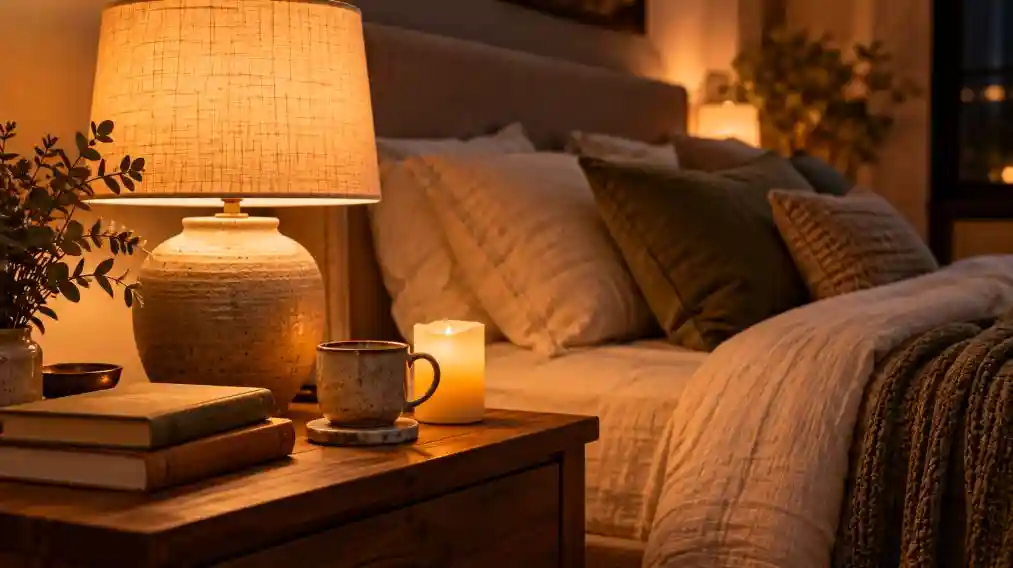
Candles: real glow, real caution
Candlelight is the classic cozy touch, but a bedroom is one of the riskiest places for an open flame because people fall asleep there. The Seattle Fire Department, citing NFPA guidance, advises avoiding candles in bedrooms, keeping any candle at least 12 inches (30 cm) from anything that can burn, and blowing them out before sleep. Good flameless LED candles with a warm flicker give a very similar look with none of that risk, which makes them the smarter choice next to bedding and curtains.
Colors That Make a Warm Aesthetic Cozy Bedroom Work
Warmth in color comes from undertone, not just from the main shade. Two whites can look almost identical on a paint chip, yet one feels creamy and soft on the wall while the other looks blue-gray and cold.
Colors that usually feel warm in a bedroom include:
- Warm whites and creams with a yellow or pink undertone, instead of stark or blue-based whites
- Clay, sand and soft beige, which feel earthy without being dark
- Terracotta, rust and muted ochre for an accent wall, bedding or cushions
- Warm browns such as caramel, walnut and mushroom
- Olive and sage greens with a yellow base, which pair naturally with wood
Room direction changes how paint looks. In the Northern Hemisphere, north-facing rooms get cooler, bluer light, so they need paint with a clear warm undertone to avoid looking gray. South-facing rooms get warmer light, and a very yellow paint there can look too strong. Always test a large sample on two walls and look at it in the morning, at night and under your lamps before committing.
If painting is not allowed, warmth can come from the large surfaces you control instead: a duvet cover, curtains, a rug and a headboard cover together take up more visual space than people expect.
Texture and Materials: Where Coziness Really Comes From
A room in one smooth fabric and one finish tends to feel cold, even in warm colors. Texture gives the eye and the hand more to notice, and that is a big part of why a space feels inviting.
Aim for a mix of three or four textures rather than one of everything. A good starting combination is washed linen or cotton bedding, one chunky knit or waffle-weave throw, a natural-fiber or wool rug, and wood somewhere near the bed. Rattan, cane, boucle, sheepskin (real or faux) and stoneware add more depth without needing more color.

Natural materials also age well. Linen softens with washing, wood picks up a gentle patina, and wool rugs hide everyday wear better than shiny synthetics, which matters if the room needs to look good for years, not just on the day it is styled.
Make the Bed the Coziest Spot in the Room
The bed is the largest object in a bedroom, so how it looks sets the tone for everything around it.
Bedding that looks warm without overheating
Layering is what makes a bed look inviting: a fitted sheet, a flat sheet or duvet, a light blanket or quilt folded at the foot, and a throw. Each layer can come off as the season changes, so the bed still looks full in summer without trapping heat.
Fabric choice matters for comfort. Linen and percale cotton breathe and suit warm sleepers or hot climates. Flannel and brushed cotton feel warmer in winter. Polyester-heavy bedding can look soft but often feels sweaty, so check the label before buying something for its looks alone.
Pillows: fewer, better
A pile of eight decorative cushions looks great in photos and ends up on the floor every night. Two sleeping pillows, two larger Euro or square cushions behind them, and one smaller accent cushion in a warm color or texture is usually enough. Keeping the cushions in two or three related shades looks calmer than many unrelated patterns.
A headboard adds instant enclosure
A bed without a headboard often looks unfinished. An upholstered, wooden or rattan headboard gives the bed a sense of shelter, which is a big part of feeling cozy. In a rental, a fabric panel or tapestry hung on removable hooks, or a freestanding headboard, gives a similar effect without drilling.
Softness Underfoot and Around the Room
Cold feet on a hard floor undo a lot of good styling. A rug next to or under the bed makes the first step out of bed warmer and helps absorb sound, which also makes a room feel calmer.
A common guideline is for a rug under the bed to extend about 18–24 inches (45–60 cm) beyond the sides, so there is soft ground on both sides when you stand up. If a large rug is out of budget, two runners on either side of the bed do the same job for less. Layering a smaller sheepskin or patterned rug over a plain jute one adds texture without much cost.
Curtains help too. Lined, floor-length curtains in a warm-toned fabric soften hard window edges, block evening drafts, and make the room feel more enclosed at night. If cold air is coming through gaps around the frame itself, curtains can only do so much, and it is worth taking an afternoon to reseal the windows first. Hanging the rod a little higher and wider than the window frame makes the window look larger in the daytime.
Cozy Without Clutter
Cozy is easy to overdo, and even a warm aesthetic cozy bedroom needs some breathing room. Too many throws, frames, plants and trinkets turn a calm room into a busy one, and a busy room rarely feels restful. A few habits keep the balance:
- Keep the nightstand to three or four items: a lamp, a book, a glass or cup, and one personal object
- Repeat the same two or three warm colors around the room instead of adding new ones
- Give every throw and cushion a place to live during the day, such as a basket or a bench at the foot of the bed
- Choose one or two larger pieces of art over many small frames
- Hide everyday clutter behind closed storage, since visible piles cancel out the warmth
A useful test: if it takes more than a couple of minutes to make the bed and tidy the surfaces, there is probably too much in the room.
Warm Bedroom Ideas for Small Rooms and Rentals
A small room can make a warm aesthetic cozy bedroom easier to achieve, because warm light and texture fill the space more easily. The trick is to add warmth without adding bulk.
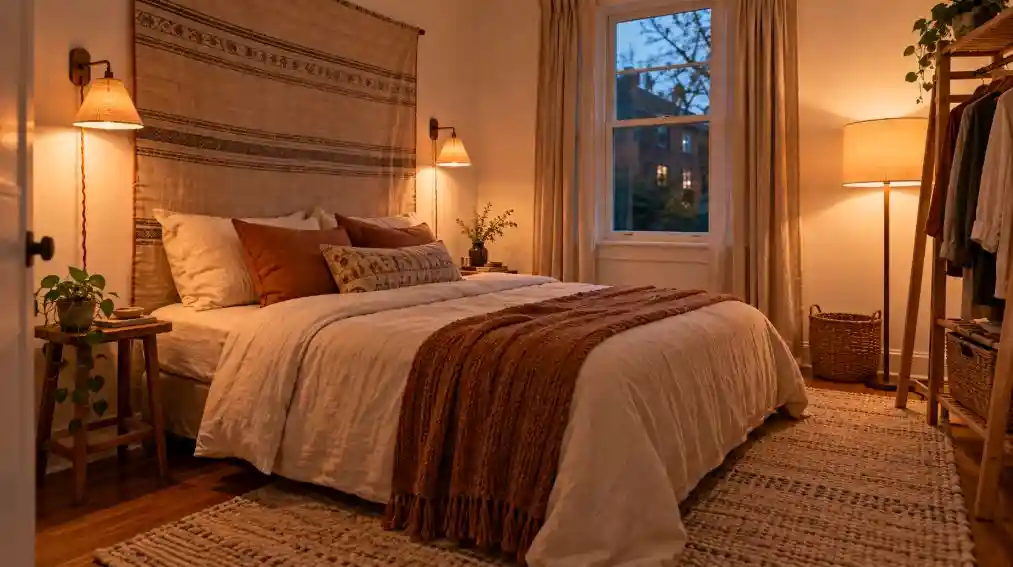
- Plug-in wall sconces free up nightstand space and need no electrician. Cord covers in a matching color keep them tidy.
- One warm accent color on the bed and curtains works better than an accent wall in a tiny room.
- Furniture with legs shows more floor, which keeps a small room from feeling cramped.
- Peel-and-stick wallpaper in a soft texture or warm pattern can go behind the bed and come off later; test a small piece first, since some paint finishes can lift.
- Removable headboard options such as a fabric hanging or a freestanding panel avoid drilling.
- Bulb swaps are the biggest renter-friendly change; keep the original bulbs to put back when you move out.
Where to Spend and Where to Save
Not every cozy upgrade gives the same return. This rough order helps when the budget is tight.
| Change | Cost level | Impact on warmth | Rental-friendly? |
|---|---|---|---|
| Warm 2700K bulbs and a dimmer plug | Low | Very high | Yes |
| Fabric lampshades | Low | High | Yes |
| Throw and two textured cushions | Low–medium | High | Yes |
| Natural-fiber bedding | Medium | High | Yes |
| Rug or bedside runners | Medium | Medium–high | Yes |
| Lined curtains | Medium | Medium | Usually |
| Warm paint color | Low–medium | High | Only with permission |
| Upholstered or wooden headboard | Medium–high | Medium | Freestanding options |
Spending on things you touch every day, such as bedding and a rug, tends to feel more worthwhile than spending on decorative extras.
Keeping the Look Fresh Through the Seasons
A warm bedroom does not have to feel heavy all year. In colder months, add the knit throw, flannel sheets and an extra layer at the foot of the bed. In summer, switch to linen or percale, fold the heavy throw away and keep warmth through color and light instead of weight.
Regular care keeps textures looking good: wash linen and throws according to their labels, vacuum natural rugs often since grit wears the fibers, and dust lampshades now and then, because a dusty shade gives off a duller, grayer light. Around the holidays, a few seasonal touches can sit on top of the same base, as covered in our Christmas decor ideas for every room.
Frequently Asked Questions
What colors make a bedroom feel warm and cozy?
Warm whites, creams, clay, sand, terracotta, caramel and yellow-based greens make a bedroom feel warm. The undertone matters most, so pick paints and fabrics with yellow, red or brown undertones rather than blue or gray ones.
What is the best light bulb color for a cozy bedroom?
A 2700K soft white bulb is the usual choice for a warm bedroom. For a very relaxed evening glow, a 2200K bulb in a reading lamp works well, while a slightly brighter bulb nearby helps for tasks like getting dressed.
How can I make my bedroom cozy without spending much?
Start with warm bulbs and fabric lampshades, then add one textured throw and two cushions in a warm color. Rearranging lamps so light comes from several low points instead of the ceiling costs nothing and changes the mood immediately.
Can a bedroom be cozy and still minimal?
Yes. A minimal cozy bedroom keeps decor sparse but relies on warm light, natural materials and a small set of textures. Fewer, better pieces in a tight warm palette often feel more restful than a room full of decorations.
How do I keep a cozy bedroom from feeling too hot?
Get the warm look from color, light and texture rather than heavy fabric. Breathable linen or percale bedding, a lightweight cotton throw and warm-toned decor keep the room looking inviting while staying comfortable in hot weather.
Where to Start This Weekend
A warm aesthetic cozy bedroom comes together in layers, and the first one is light. Swap in warm bulbs, turn off the ceiling light in the evening and add a lamp or two at a lower height. Next, bring in one or two textured pieces for the bed and a rug or runners for the floor. Only then decide whether paint, a headboard or new furniture is still needed.
Working in that order keeps spending low and stops the room from filling up with things it does not need. By the time each layer is in place, the bedroom should feel calm, soft and genuinely restful.