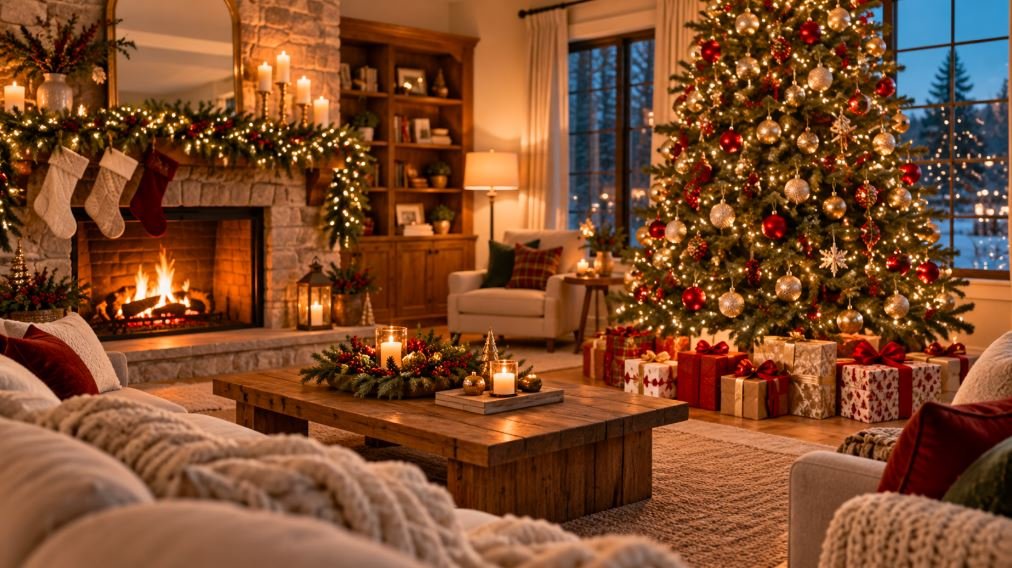
The best Christmas decor ideas make a home feel festive without making every room feel crowded. A tree covered in ornaments can look beautiful, but so can a simple room with warm lights, greenery, and a few carefully chosen decorations.
The trick is to decorate the home as one connected space. Pick a color direction, decide which areas deserve the most attention, and let smaller details carry that look into the rest of the house.
These Christmas decoration ideas work for large homes, small apartments, rentals, and tighter budgets. Some are traditional, while others suit modern, neutral, rustic, or simple interiors.
Choose a Christmas Look Before You Start Decorating
Opening every storage box at once can make decorating harder. Before placing anything, decide what the finished home should feel like.
A simple color palette keeps decorations from looking scattered. Traditional red, green, and gold creates a familiar Christmas look. White, green, and natural wood feel calmer. Burgundy, brass, and deep green can create a richer look, while silver, white, and soft blue suit a cooler winter style.
Two or three main colors are usually enough. They do not need to appear in equal amounts.
The existing room should guide the choice. A beige or cream living room may need only greenery, warm metallic details, and red accents. A colorful home can often handle stronger ornaments without feeling busy.
This also saves money. Instead of replacing everything, older decorations can be sorted by color and reused within a new scheme.
Christmas Decor Trends for 2026
This year’s Christmas looks lean warmer, richer and more natural than the all-white schemes of a few years ago. You do not need all of them. Pick one or two that suit your home and repeat them in a few places.
- Bows everywhere. Velvet and satin bows are showing up on trees, garlands, chair backs and wreaths. One bow color, repeated, looks more finished than many mixed ribbons.
- Burgundy, oxblood and aged gold. Deeper reds are replacing bright red, often paired with antique brass or aged gold instead of shiny metallics.
- Tartan, plaid and stripes. Classic patterns return on throws, cushions, tree skirts and stockings. They are an easy way to add warmth without buying new decorations.
- Natural, old-fashioned greenery. Layered pine, cedar and eucalyptus mixed with dried orange slices, cinnamon sticks and pinecones.
- Woven and vintage textures. Rattan stars, wicker baskets, wooden ornaments and vintage-style toys bring a softer, handmade feel.
If you only change one thing this year, change the textiles. A tartan throw and a few velvet bows can make last year’s decorations feel new.
Let the Christmas Tree Set the Tone
For many homes, the tree is the largest seasonal feature. Decorating it first makes the rest of the room easier to plan.
For a step-by-step plan covering lights, ornaments and ribbon, see these Christmas tree decorating ideas.
1. Use Repeated Colors Across the Tree
A tree often looks more put together when a few colors repeat from top to bottom.
Mix different ornament sizes instead of using dozens of identical pieces. Larger ornaments can fill deeper gaps, while smaller pieces add detail near the branch tips.
Leave some visible greenery between decorations. Covering every branch can make the tree feel heavy, especially in a smaller room.
2. Add Ribbon Without Covering the Branches
Ribbon can connect the color palette without requiring many extra ornaments.
Instead of wrapping one long ribbon tightly around the tree, tuck shorter sections loosely between branches. This creates softer movement and makes the tree feel fuller.
Velvet gives a warmer, traditional feel. Linen-style ribbon suits rustic rooms, while satin or metallic ribbon works well in more polished interiors.
3. Make the Tree Base Part of the Design
The bottom of the tree is easy to overlook.
A tree skirt, woven basket collar, fabric wrap, or simple decorative box around the stand can make the whole setup look finished.
Match the base to the room rather than the ornaments alone. A woven basket works naturally with wood furniture and neutral interiors, while velvet or patterned fabric can suit a more traditional room.
Build the Living Room Around One Strong Festive Area
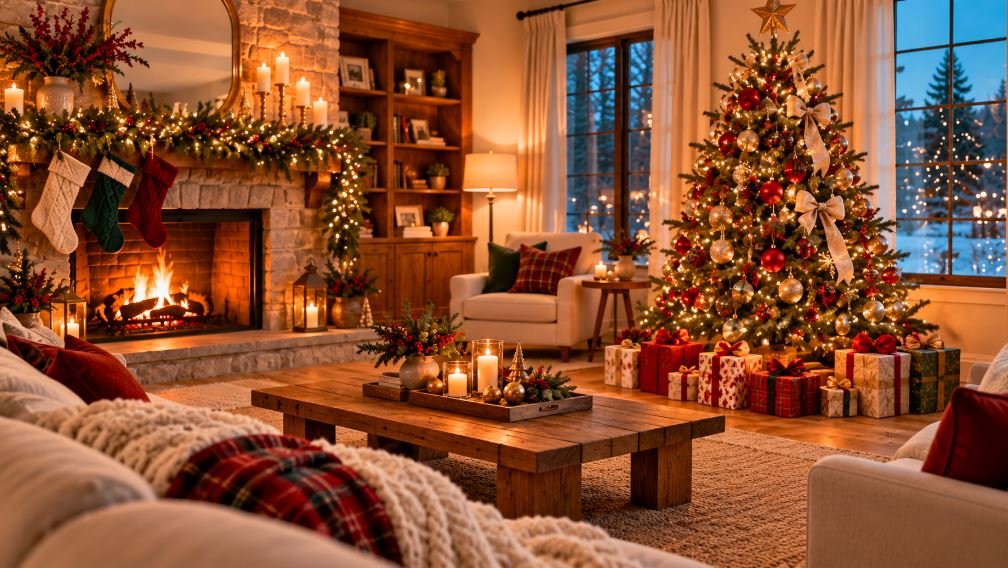
The living room usually needs fewer decorations than people expect.
Once the tree becomes the focal point, nearby surfaces should support it rather than compete with it.
4. Style the Mantel in Layers
A mantel gives Christmas greenery, stockings, candles, and decorative objects a natural home.
Start with one main layer, such as evergreen garland. Then add smaller details. Pinecones, ribbon, bells, dried orange slices, ornaments, or flameless candles can bring color and texture.
Leave some space. A mantel filled from edge to edge can lose its shape.
If there is no fireplace, the same idea works on a console table, long shelf, sideboard, or floating shelf.
5. Change Textiles Instead of Adding More Objects
Seasonal textiles are one of the easiest ways to change a room without filling every surface.
Replace one or two regular cushion covers with Christmas or winter designs. Add a warm throw over the sofa or chair, and swap a harsh ceiling light for a table lamp with a soft, warm glow in the evenings.
The fabric does not need pictures of Santa or Christmas trees. Plaid, velvet, boucle, deep green, burgundy, cream, or subtle metallic details can create a festive mood without looking overly themed.
6. Keep the Coffee Table Simple
A coffee table still needs to function during December.
A small tray with greenery, pinecones, ornaments, and a flameless candle is often enough. The tray keeps smaller pieces together and can be moved when the table is needed.
For a smaller room, one arrangement is usually better than several separate decorations.
Christmas Decor Ideas for Small Spaces
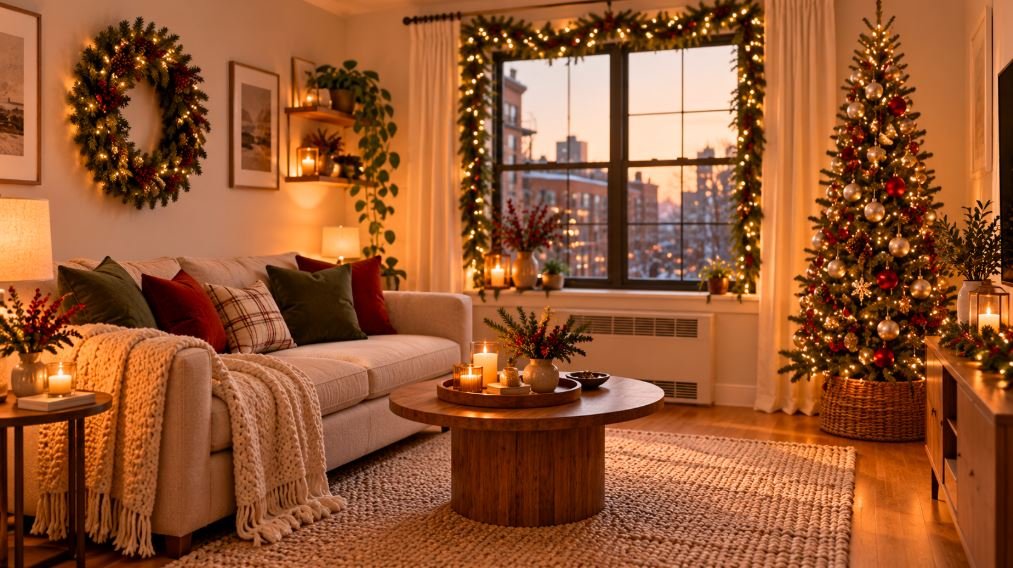
Small homes do not need miniature versions of every decoration used in a large house. They need a different approach.
Focus on walls, shelves, windows, doors, and existing furniture so decorations do not take over valuable floor space.
7. Try a Slim or Tabletop Christmas Tree
A full tree can make a compact living room difficult to move through.
A slim tree fits more comfortably into a corner. A tabletop tree can sit on a sideboard, console, sturdy table, or dresser and still create a clear Christmas focal point.
Before buying a new tree, measure the corner and the ceiling height first, and leave room for the tree to spread at the base. Our guide on how to measure a room for furniture works just as well for a tree.
Another option is to skip the traditional tree entirely and decorate a large branch arrangement, wall tree, or shelf display.
This can work especially well in apartments where storing a full artificial tree for the rest of the year is difficult.
8. Decorate Upward Instead of Outward
Walls and door frames offer useful decorating space without reducing walking room.
A wreath can fill an empty wall. Garland can frame a doorway, mirror, shelf, or window. Hanging ornaments can decorate a window without taking up a table.
Vertical decorating also helps a small room feel festive while keeping surfaces less cluttered.
9. Remove Some Everyday Decor First
Adding Christmas decorations on top of everything already in a room often causes the crowded look people are trying to avoid.
Temporarily store a few regular objects.
A vase, decorative bowl, artwork, or extra cushions can come back after the holidays. This creates room for Christmas pieces without adding visual weight.
Carry the Decoration Into the Dining Area
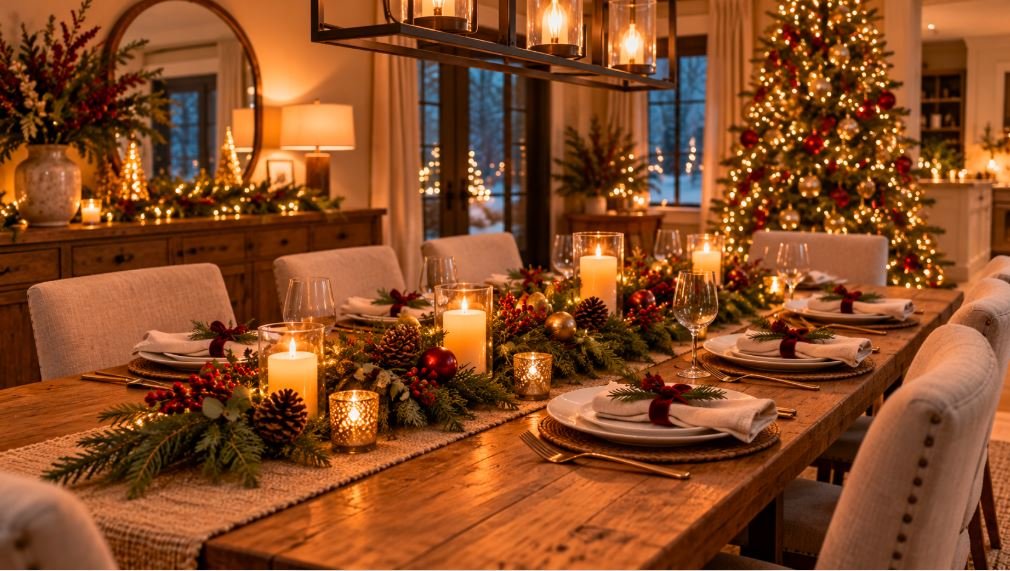
The dining room can feel festive without staying permanently set for a formal dinner.
10. Build a Low Christmas Table Centerpiece
Tall arrangements can block conversation and take up serving space.
A lower centerpiece usually works better for everyday dining. Try greenery along the middle of the table with pinecones, small ornaments, flameless candles, or a few seasonal flowers.
For a long table, several small groups may look more balanced than one large centerpiece.
Keep enough clear space for plates, glasses, and serving dishes. A centerpiece that has to be removed every time people eat is unlikely to stay useful for long.
11. Use Napkins and Place Settings as Decoration
A festive table does not need expensive seasonal dinnerware.
Plain white plates can work with red, green, plaid, or neutral cloth napkins. Tie each napkin with ribbon, twine, or a small sprig of greenery.
These details add Christmas color without requiring another box of plates that needs storage for most of the year.
12. Give Dining Chairs a Small Seasonal Detail
A narrow ribbon, small wreath, or greenery tied to the back of selected chairs can connect the dining table with the rest of the room.
Keep these decorations light and secure so they do not make the chairs uncomfortable to use.
Add Christmas Details to the Kitchen Without Losing Counter Space
Kitchen decorations should work around cooking rather than make cooking harder.
The easiest approach is to decorate places that are already mostly decorative.
13. Use a Small Holiday Display on One Counter
Choose one low-traffic corner for a small arrangement.
A miniature tree, bowl of ornaments, greenery in a vase, or simple ceramic village can work well. Keep the main preparation areas clear.
Christmas tea towels can add color without using extra space.
14. Decorate Open Shelves Lightly
Open shelves already contain plenty of objects, so only a few changes are needed.
Add a small wreath, a piece of greenery, a seasonal mug, or a miniature tree between everyday items.
Removing one normal decorative object before adding a Christmas piece helps the shelf stay balanced.
Make the Entry Feel Festive From the First Step Inside
The entry is a good place for a smaller version of the home’s main Christmas theme.
15. Style the Console or Entry Table
Start with one anchor piece such as a wreath, mirror, seasonal artwork, or arrangement of branches.
Below it, add a short garland, bowl of ornaments, miniature trees, or a few flameless candles.
Keep keys, bags, and everyday items in mind. If the console is used daily, leave practical space rather than filling the full surface.
A basket below the table can also hold extra throws, gift bags, or neatly wrapped presents.
Outdoor Christmas Decor Ideas That Feel Connected to the House
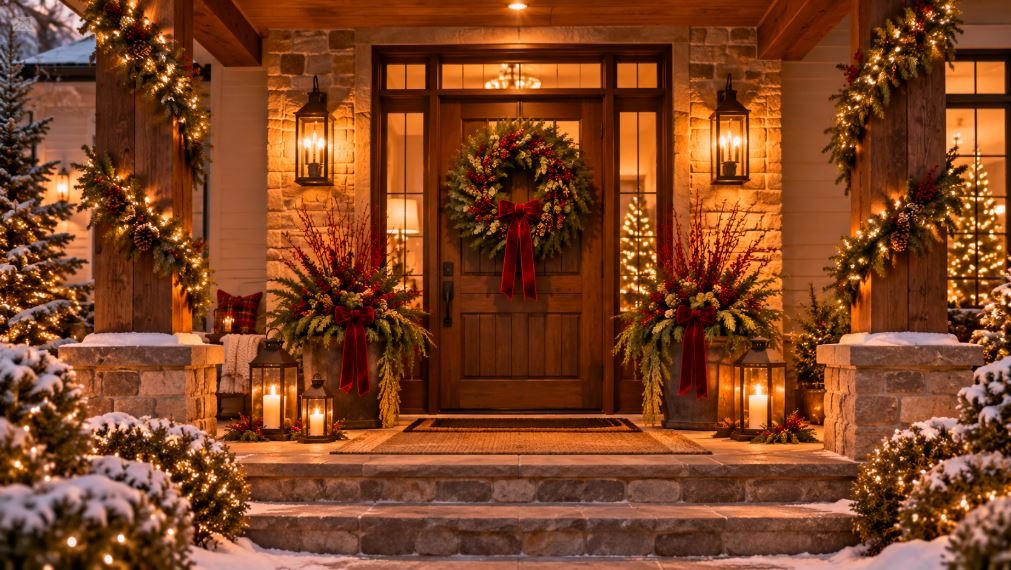
Outdoor decorating does not need to compete with the brightest house on the street.
Repeating a few materials from the indoor decor can make the entrance feel connected to the rest of the home.
16. Start With the Front Door
A wreath creates a strong focal point with very little effort.
Traditional evergreen works with almost any home. A simpler wreath with branches, berries, pinecones, bells, or ribbon can suit modern and rustic exteriors.
If the door is already a strong color, choose a wreath that contrasts with it rather than adding too many competing colors.
17. Use Planters for Height
Existing outdoor planters can become part of the Christmas display, and if the beds around the entrance need work first, our front yard landscaping ideas cover simple fixes that last all year.
Fill suitable containers with seasonal greenery, branches, pinecones, and weather-appropriate decorative elements. Tall branches in the center can create height while greenery softens the edge.
A pair of planters near the entrance often creates more impact than many small decorations spread across the porch.
18. Keep Outdoor Lighting Consistent
Choose one general light color and repeat it across the visible exterior.
Warm white lights tend to create a softer look, while multicolor lights give the home a more playful style. Either can work well when used intentionally.
Before installing electrical decorations outdoors, confirm that the lights, extension cords, and other equipment are designed for the intended use. Damaged light sets should not be used, and electrical outlets should not be overloaded. The U.S. Consumer Product Safety Commission also advises keeping candles away from flammable decorations and turning them off before leaving the room.
Make Bedrooms Feel Festive Without Fully Redecorating Them
Bedrooms usually need only a few seasonal details.
Changing every cushion, curtain, and piece of bedding can become expensive and difficult to store.
19. Add Christmas Around the Bed, Not Everywhere
A small wreath over the headboard, greenery on a dresser, one seasonal cushion, or a soft throw can be enough. When the decorations come down, these warm aesthetic cozy bedroom ideas keep the same calm feeling for the rest of the year.
String lights may also create a cozy effect when the product is suitable for the location and installed according to its instructions.
For children’s rooms, consider where ornaments and decorations are placed. Avoid putting fragile or small removable pieces within easy reach of young children. CPSC holiday safety guidance specifically recommends extra care with sharp, breakable, or small decorations in homes with children.
Simple DIY Christmas Decoration Ideas That Do Not Look Cheap
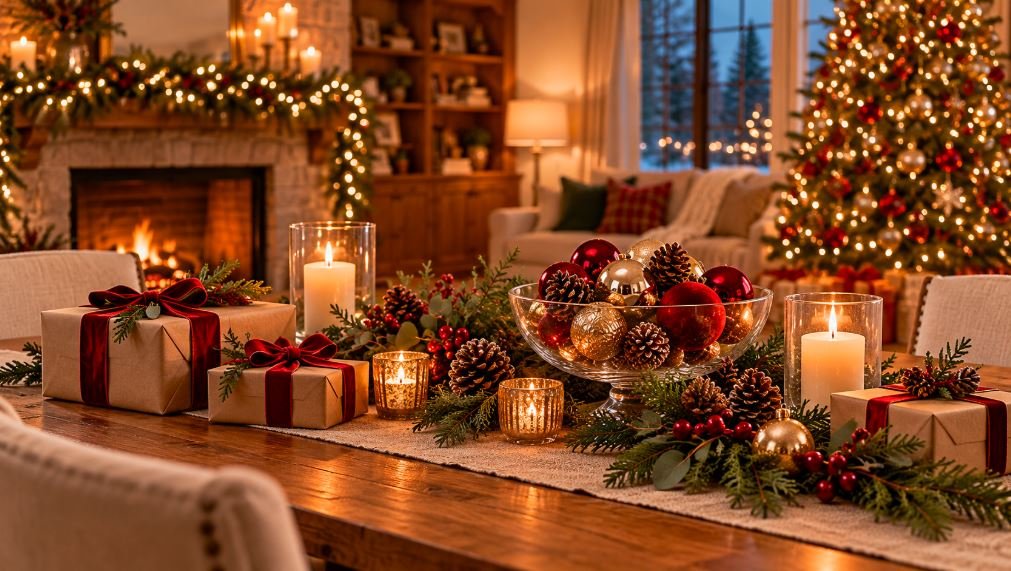
DIY does not have to mean covering the house in complicated crafts.
Some of the most useful homemade decorations come from repeating basic materials already used elsewhere.
Natural branches can fill a vase. Pinecones can sit in a bowl or be added to garland. Leftover ribbon can tie wreaths, napkins, stockings, and small ornaments together.
Plain kraft paper can also become part of the decor. Wrap presents in the same paper and vary the ribbon. Once placed under the tree, the gifts become another layer of the room’s Christmas palette.
Another easy option is to reuse older ornaments differently. Fill a clear bowl, tray, vase, or shallow basket with ornaments that are not being used on the tree.
This gives existing decorations a new purpose without buying another seasonal object.
How to Keep Christmas Decorations From Looking Cluttered
The easiest way to control visual clutter is to repeat rather than constantly add.
Repeat the same greenery in several rooms. Use the same ribbon on the tree and wreath. Carry one metallic finish from the ornaments to the dining table.
Then leave some parts of each room untouched.
Every shelf does not need garland. Not every chair needs a cushion. Not every window needs lights.
A useful rule is to choose a focal point first and make nearby decorations quieter. In the living room, the tree may be the focal point. In the dining room, it might be the table. At the front entrance, the wreath or doorway can take that role.
The eye then has somewhere clear to land.
What Should You Buy First on a Small Christmas Decor Budget?
Spend first on pieces that can work in several places or return every year.
A basic strand of greenery can decorate a mantel one year and a console the next. Neutral ornaments can move between different color schemes. Simple warm lights work with traditional, rustic, and modern rooms.
Before buying new decorations, sort what is already available into groups such as:
- Greenery
- Lights
- Ornaments
- Ribbon
- Table decor
- Outdoor pieces
Seeing everything together often reveals useful combinations that are easy to miss when decorations remain inside separate boxes.
If something no longer suits the new color scheme, it does not necessarily need replacing. Move it to another room, use only part of the set, or leave it stored for a different year.
Frequently Asked Questions
How can I decorate my home for Christmas without spending a lot?
Reuse existing ornaments in different places, add ribbon or greenery to everyday objects, and focus on one or two main decorated areas. Wrapping presents in a coordinated style can also add color beneath the tree without buying extra decorations.
What colors look good for Christmas decor?
Red, green, and gold create a traditional look, while green, white, cream, wood, and brass feel softer. Silver and blue can create a cooler winter palette. The best choice is one that works with the home’s existing furniture and colors.
How do I decorate a small living room for Christmas?
Choose one main focal point, use a slim or tabletop tree, decorate vertically, and remove a few everyday objects before adding seasonal pieces. This adds Christmas character while keeping walking space and furniture usable.
How can I make Christmas decorations look elegant?
Use fewer colors, repeat materials, mix different textures, and leave some space between decorations. A limited palette of greenery, ribbon, warm lighting, and a few ornaments often feels more polished than many unrelated pieces.
Where should I start decorating for Christmas?
Start with the area that has the strongest visual impact, usually the Christmas tree or main living room. Once its colors and materials are set, carry smaller versions of the same look into the entry, dining area, kitchen, bedrooms, and porch.
Bring the Whole Christmas Look Together
Good Christmas decor ideas do not depend on how many decorations fit inside a room. They depend on placement, repetition, and knowing when a space has enough.
Start with the tree or another strong focal point. Repeat a limited color palette through greenery, ribbon, lights, and small seasonal accents. Give busy rooms fewer decorations, and use walls or existing furniture when floor space is limited.
The result should still feel like the same home, just warmer and more festive for the season.