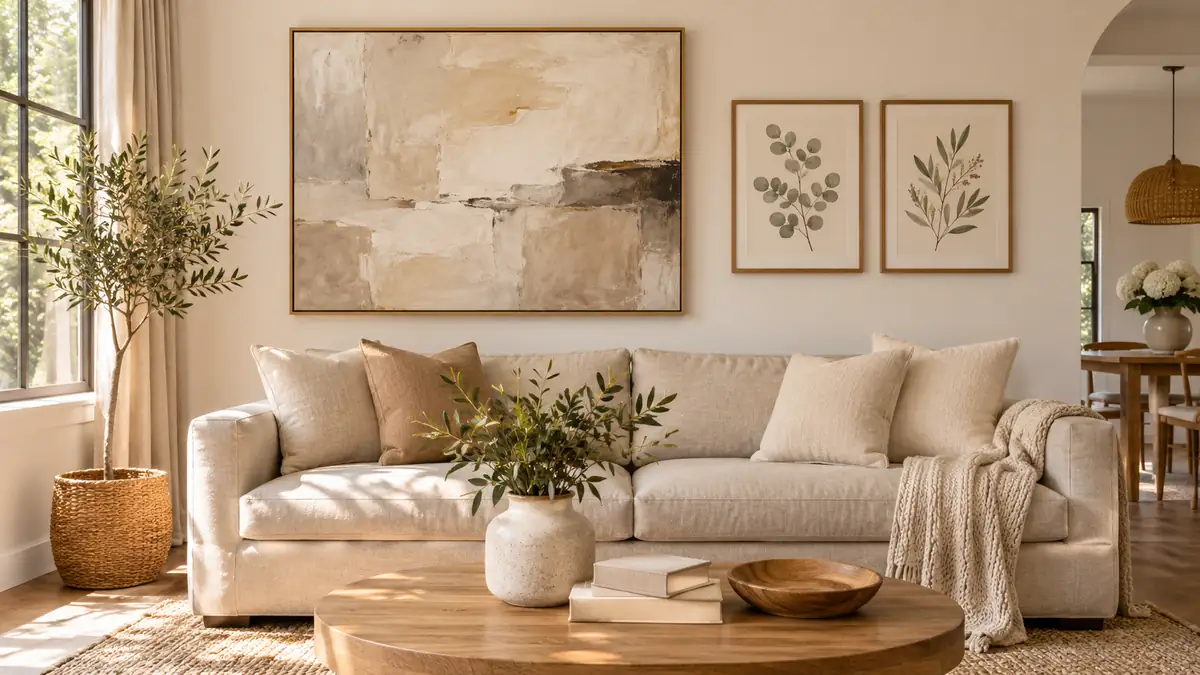
An empty wall can make a room feel unfinished even when the furniture looks right. The best wall art ideas give that space a purpose whether you want a calm bedroom, a lively living room or a personal display of memories. You do not need expensive paintings or a large house to make it work.
A single print, a few family photos or a simple handmade piece can change how a room feels. The trick is to choose art that suits the wall, the furniture and your daily life. These ideas cover different styles and budgets along with easy ways to arrange everything without making the space feel crowded.
Start With Art That Catches the Eye
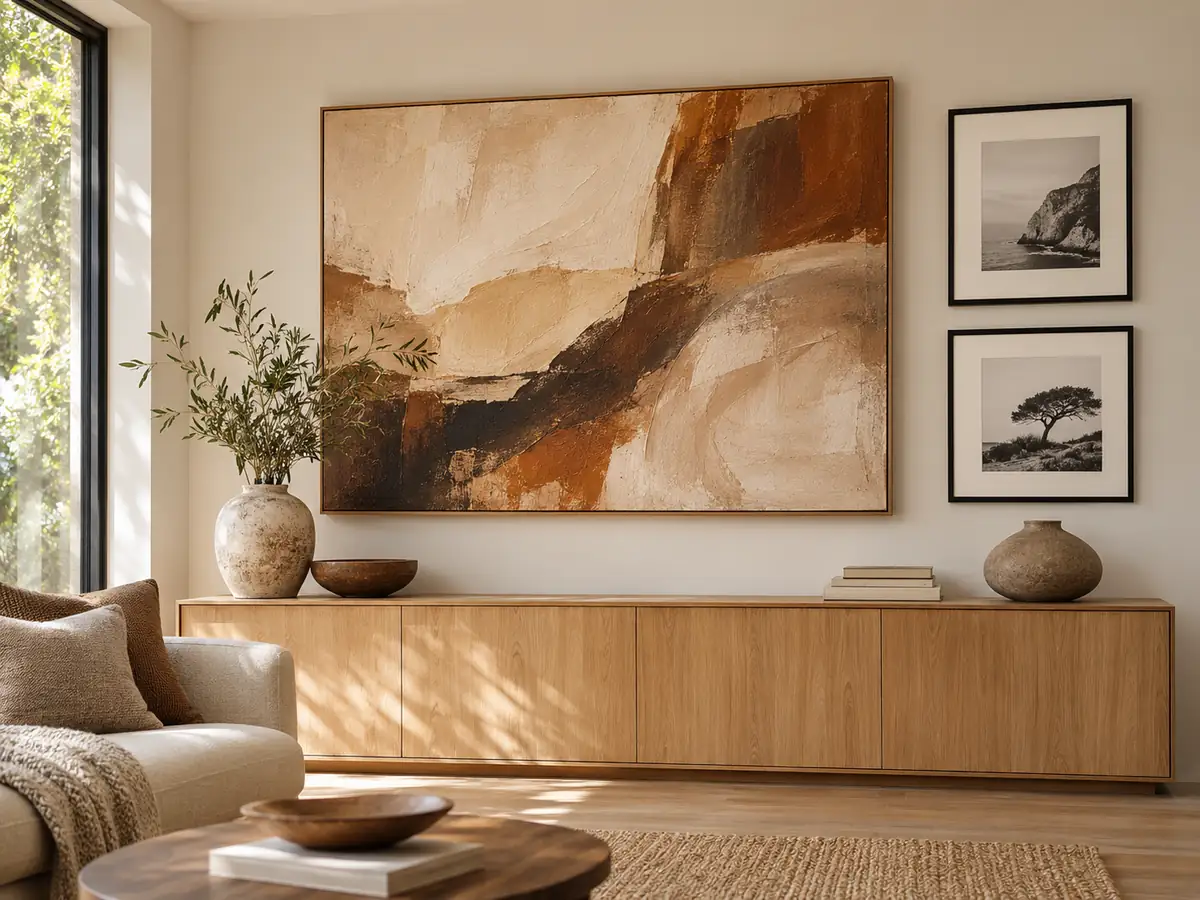
Some walls need one clear feature. Others look better with several smaller pieces that work together. These approaches help you decide what the eye should notice first.
1. Hang One Oversized Abstract Canvas
Abstract art uses shapes and colors instead of a clear picture. A large canvas can make a wall interesting, especially when its colors match your rug or cushions. This works especially well over a sofa or low cabinet. Leave some open wall around the piece; filling every inch can make even beautiful art feel cramped.
2. Place Two Related Prints Side by Side
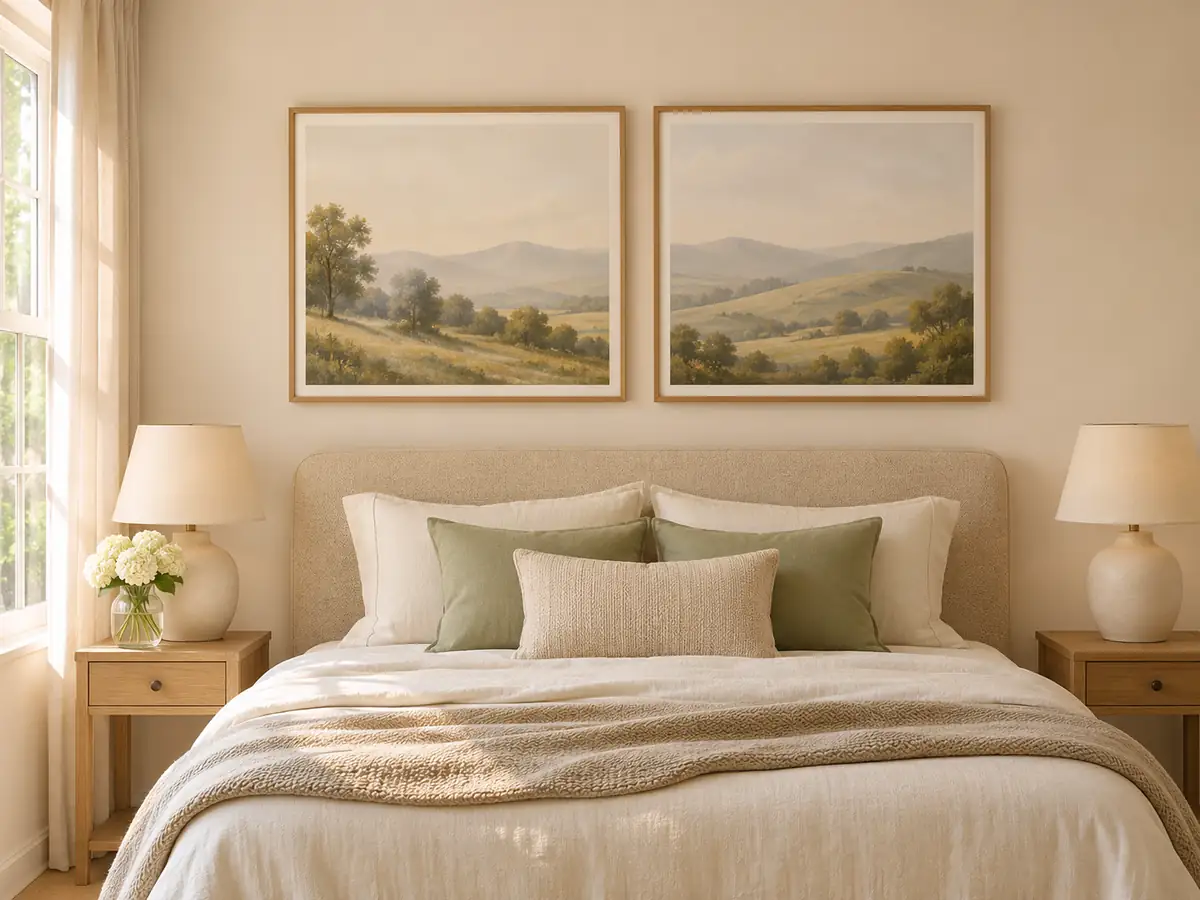
Two prints can look calmer than a busy collection. Try matching sizes with different but related images such as two landscapes, two simple line drawings or a pair of flower studies. Keep the gap between frames even. If the pictures have different colors use the same frame finish to help them feel like a set.
3. Build a Gallery Wall That Tells a Story
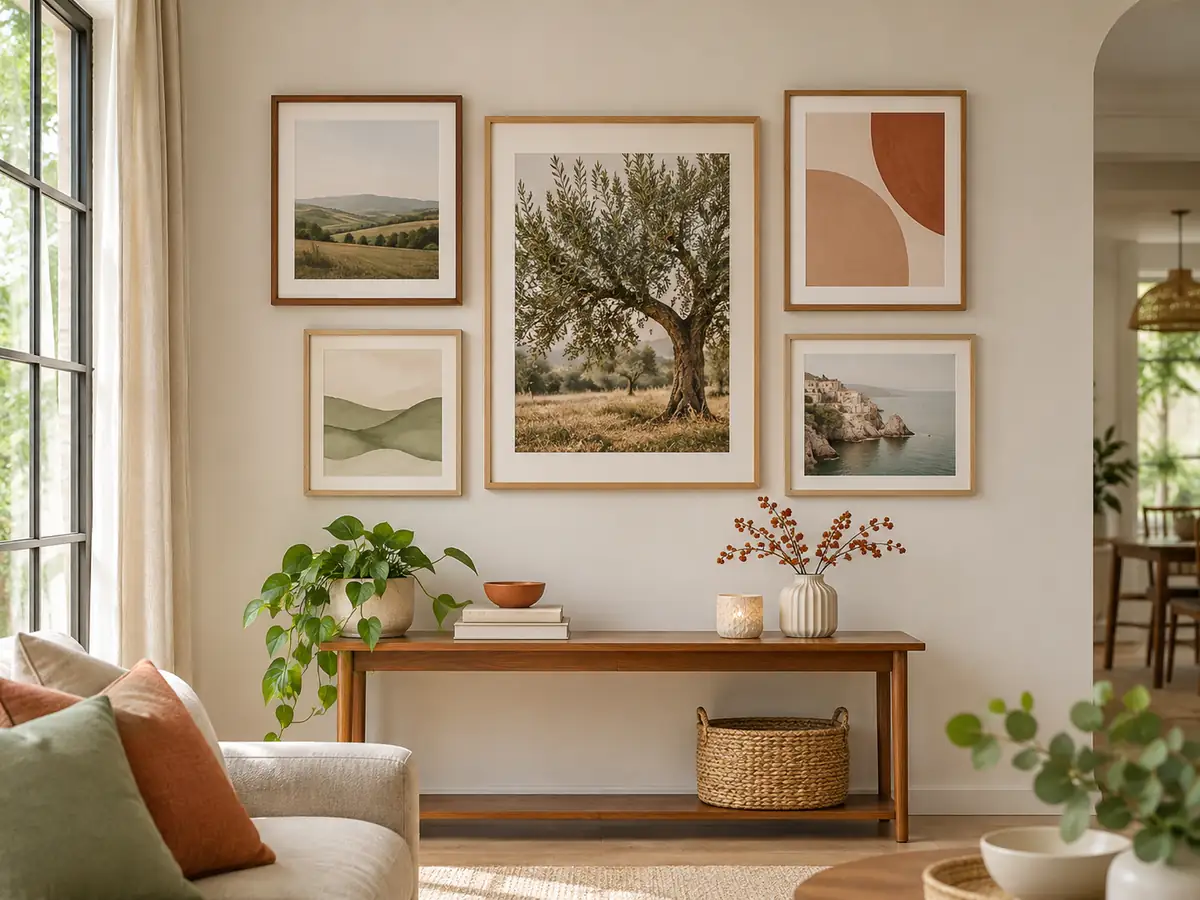
A gallery wall is a group of pictures arranged together. Mix family photos, art prints, a travel postcard and one small keepsake so the display tells a personal story. For a small wall, try just three frames: one larger picture and two smaller ones.
Arrange them on the floor or test paper outlines on the wall before making holes. Repeat one feature such as black frames or warm colors, to give the different pieces a shared look. For more ways to arrange different pictures see these gallery wall layout ideas.
4. Try a Neat Grid of Matching Frames
For a modern wall arrange four or six matching frames in tidy rows. Simple drawings of leaves, black and white photos or small abstract prints work well because the layout already provides structure. Measure the gaps carefully and keep them consistent. A grid suits home offices, narrow dining areas and rooms where a mixed gallery might feel too busy.
5. Use Black and White Photography
Black and white photographs add interest without introducing several new colors. Choose city scenes, nature, buildings, or your own family pictures to match the mood you want.
Wide white borders around the photos can make inexpensive prints look more considered. Use frames that suit nearby furniture instead of trying to match every item in the room.
Choose Art With Character
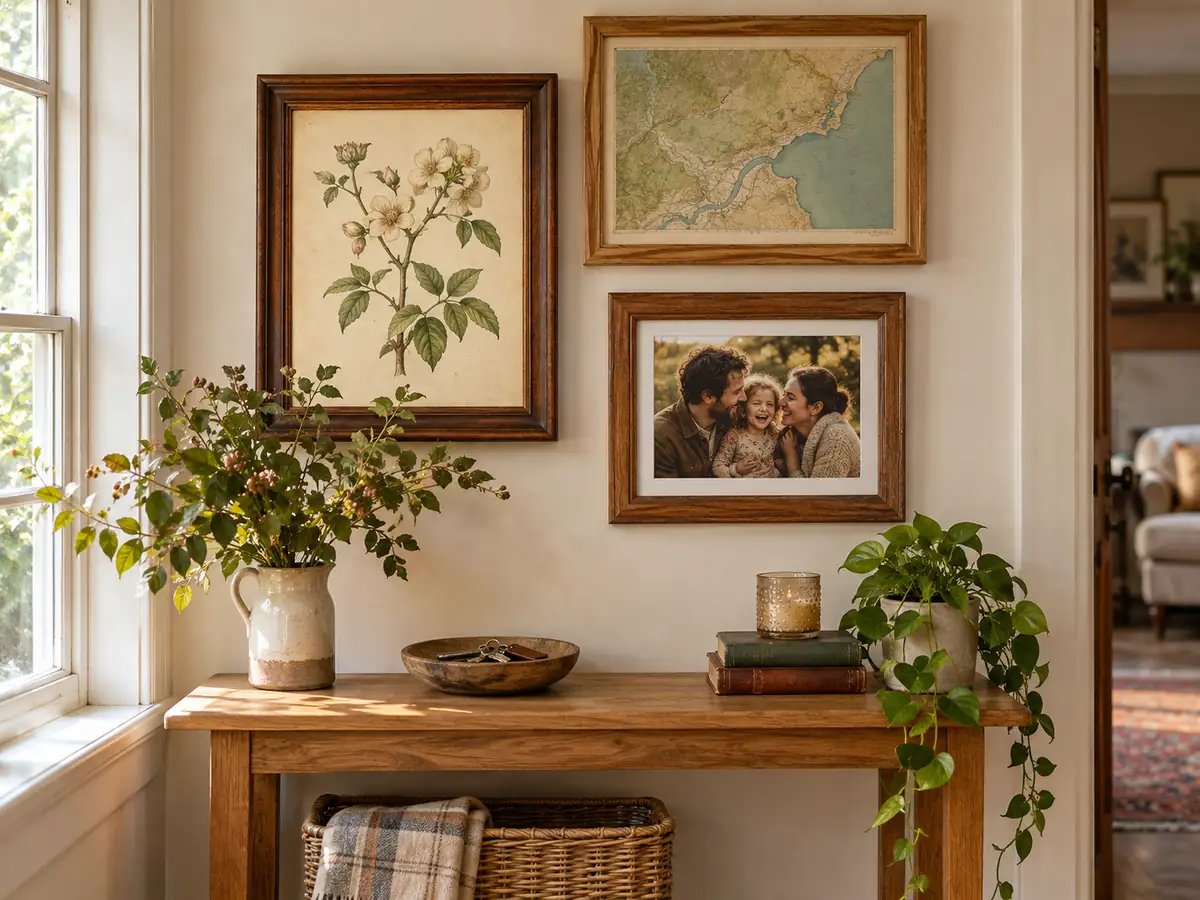
Wall art does not have to be a new canvas from a store. Prints, personal drawings, and older pieces can make a room feel more like the people who live there.
6. Frame Vintage Illustrations
Old style drawings of plants, travel posters, and book illustrations can add warmth to a modern room. Look for clear images with colors that fit your space, then place them in simple frames. A vintage print beside clean lined furniture can create a nice contrast. Avoid using too many unrelated styles on one small wall.
7. Bring Nature Inside With Plant and Flower Prints
Prints of leaves, flowers, and peaceful landscapes work with many decorating styles. Two or three plant themed pictures, also called botanical prints, can soften a bedroom, reading corner or dining space.
Choose light backgrounds for a fresh look or darker green tones for a cozy feel. Real plants nearby can tie the display into the room without needing more art. For a bedroom, our warm and cozy bedroom ideas explain how colors, lighting and soft materials can work with the artwork.
8. Display a Map of Somewhere Meaningful
A framed map of your hometown, a favorite trip or a place you hope to visit gives the wall a personal story. A simple street map or coastal outline often looks cleaner than a crowded poster.
This idea works well in an entryway or home office. Pick a frame color that appears elsewhere in the room so the map does not feel out of place.
9. Give Children’s Artwork a Proper Frame
Children’s drawings can look wonderful when displayed with care. Choose a few favorites, place them in matching frames, and leave enough space around each picture for its colors to stand out.
Use frames that open easily if you want to change the display. A hallway or family room lets everyone enjoy the artwork without covering the refrigerator.
10. Make a Small Memory Wall
Frame a handwritten recipe, concert ticket, special letter or postcard beside one or two photographs. Keep the collection small enough that visitors can notice the details instead of seeing a wall full of tiny objects.
Use a deep frame often called a shadow box, for items that cannot lie flat. This also helps protect delicate keepsakes from frequent touching. For a valuable letter or photo consider displaying a copy. The Library of Congress framing guide explains how to protect delicate originals from light and moisture.
Try Handmade Art and Soft Textures
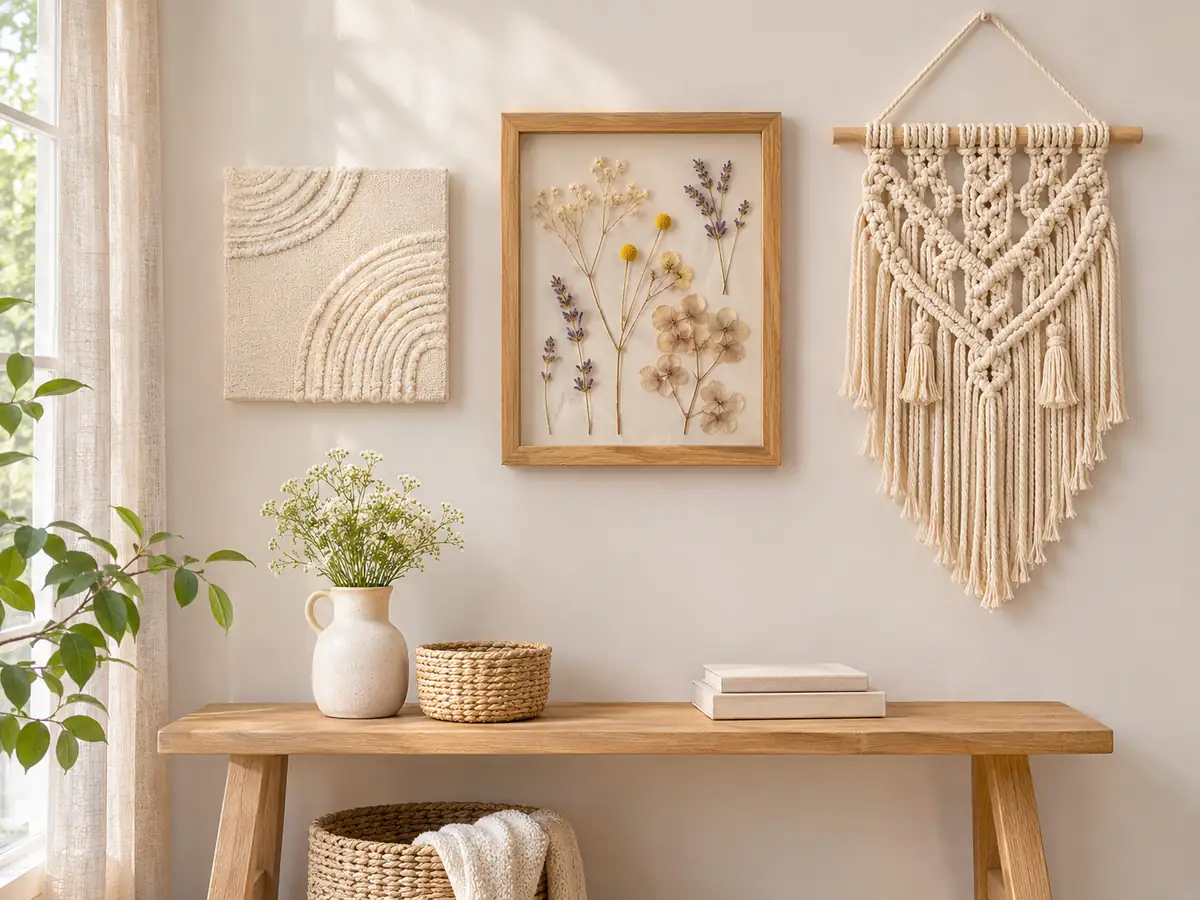
Paintings and photographs are not the only options. Fabric, paper and natural materials bring a different kind of detail to a blank wall often for very little money.
11. Make a Textured Canvas
A plain canvas with raised shapes can give a room a soft, modern look. Beginners can use suitable ready made craft texture paste, then paint the surface in cream, beige or another color that suits the room.
Keep the design simple: a few curved lines or wide shapes are enough. Follow the material instructions and let the piece dry fully before hanging it.
12. Frame a Piece of Beautiful Fabric
Leftover patterned fabric, a scarf or a small woven textile can become affordable wall art. Stretch it neatly behind a frame or use a fabric safe mounting method that does not damage a piece you value.
This is useful when the room needs texture but another bright painting would feel too bold. It also lets you repeat a color from your pillows or bedding.
13. Create Pressed Flower Art
Pressed flowers and leaves make delicate artwork for a quiet corner. Arrange fully dried plants on paper, keep the layout simple, and place them behind a frame that protects them from dust.
These pieces suit bedrooms and home offices. Keep them away from strong direct sunlight and damp areas, which can fade or damage natural materials.
14. Paint or Cut Simple Shapes for a Collage
Paint simple circles or arches on thick paper, or cut leaf shapes from colored sheets and arrange them on a plain background. Using only two or three colors makes the design feel planned.
Make two related designs for a matching pair of frames. This is an easy DIY wall art project for beginners and anyone decorating on a budget.
15. Hang Woven Art or a Knotted Rope Piece
Macramé is wall art made by tying rope into patterns. It adds a soft, handmade feel where framed pictures may look too flat. Cotton and wool pieces work well with wood furniture and warm colors.
Choose one piece large enough to be noticed rather than several small hangings close together. Make sure its support and wall fixing can carry the weight securely.
Match the Art to the Room
The same print can feel right in one space and awkward in another. Think about how the room is used, what furniture sits below the wall and how much empty space is available.
16. Anchor Living Room Art to the Sofa
For art above a couch, start with a group that is roughly two thirds the sofa’s width. That might be one wide canvas, two medium prints or a small gallery with a clear outer shape.
Center the arrangement over the sofa rather than the entire wall. This makes the artwork feel connected to the seating area instead of floating on its own.
17. Keep Bedroom Art Calm and Secure
Above a bed, soft landscapes, line drawings and gentle abstract prints can create a restful look. A wide piece or two balanced frames often work better than many little pictures fighting for attention.
If you hang anything over the headboard use the correct wall fixings and secure it properly. Command’s picture-hanging instructions specifically warn against using its adhesive strips above beds.
18. Give the Kitchen or Dining Room a Small Art Moment
A framed picture of fruit, flowers, food or a simple landscape can make a breakfast nook feel welcoming. In a dining room, a larger painting can add warmth without taking up table space.
Keep paper prints and frames away from the stove, sink splashes and heavy steam. Choose a place where the artwork can be enjoyed without getting dirty quickly. For more ways to bring the whole space together see our dining room decor ideas.
19. Choose Protected Prints for the Bathroom
A small coastal photograph, plant print or calm abstract design can make a bathroom feel less bare. One or two well chosen pieces are often enough for a compact space.
Moisture matters here. Use a suitable protective frame, keep the art away from direct splashes and avoid displaying valuable paper pieces in a damp room. Our small bathroom ideas also cover lighting, finishes and other details that help a compact room feel more comfortable.
20. Follow the Shape of a Hallway or Stair Wall
Narrow halls suit a vertical line of small frames or one tall artwork. Along a staircase, a photo collection can rise with the steps while keeping its spacing visually steady.
For a small apartment, this turns an often forgotten area into useful display space. Keep frames clear of places where people or bags might knock into them.
How to Make Wall Art Look Well Planned?
Good placement matters as much as the art itself. Before you buy frames or make holes, check these simple details.
Match the Scale to Nearby Furniture
Tiny pictures can disappear above a long sofa. Large art may overwhelm a narrow wall, so test the size with paper cutouts before buying.
Use the Room’s Colors as a Guide
Choose one or two colors from your furniture or fabrics. The art does not need to match perfectly, but shared colors can make the room feel connected.
Leave Space Between Pieces
A gallery wall should feel like one display, not a pile of frames. Start with even gaps then adjust the layout until everything looks balanced.
Hang Art at a Comfortable Viewing Height
For a single piece, placing its center around 57-60 inches (145-152 cm) from the floor is a common starting point. Adjust the height when hanging art above furniture or along stairs.
Choose the Right Hanging Method
Light frames may work with removable strips on suitable smooth walls but every product has weight and surface limits. Heavy artwork and pieces near beds need secure fixings suited to the wall.
Keep Rental Walls in Mind
If you cannot drill holes, try leaning a framed print on a stable shelf or cabinet. Removable strips may also help but check the instructions and rental rules first, as some wall finishes can still be damaged.
For a polished look on a small budget, focus on clean frames, careful spacing and one main piece that catches the eye. A simple print hung well often looks better than several expensive pictures crowded together.
Conclusion
Decorating an empty wall does not have to be expensive or difficult. From a large canvas to a personal gallery wall, the best wall art ideas are the ones that match your space, budget and personal style.
Start with one wall, choose colors that work with your furniture and plan the layout before hanging anything. Even a few simple pieces can make your home feel warmer, more welcoming and truly yours.
FAQs
What wall art styles are popular now?
Large artwork, raised textures, natural shapes and personal photo collections are popular choices. These styles work best when they suit the home instead of being copied just because they are fashionable.
Are gallery walls out of style?
No. Gallery walls still work but many current examples feel more personal and less perfectly matched. Mixing meaningful photos, small artworks and keepsakes can give a display character without making it feel cluttered.
What is the main rule for a gallery wall?
There is no single rule but the pieces should feel connected. Repeat a frame color, artwork theme or color palette and plan the spacing before putting anything on the wall.
What is the best color for a gallery wall?
There is no one best color. Neutral frames are easy to mix with different art while colorful frames can work when they repeat shades already in the room. Choose the look that supports your artwork rather than competes with it.