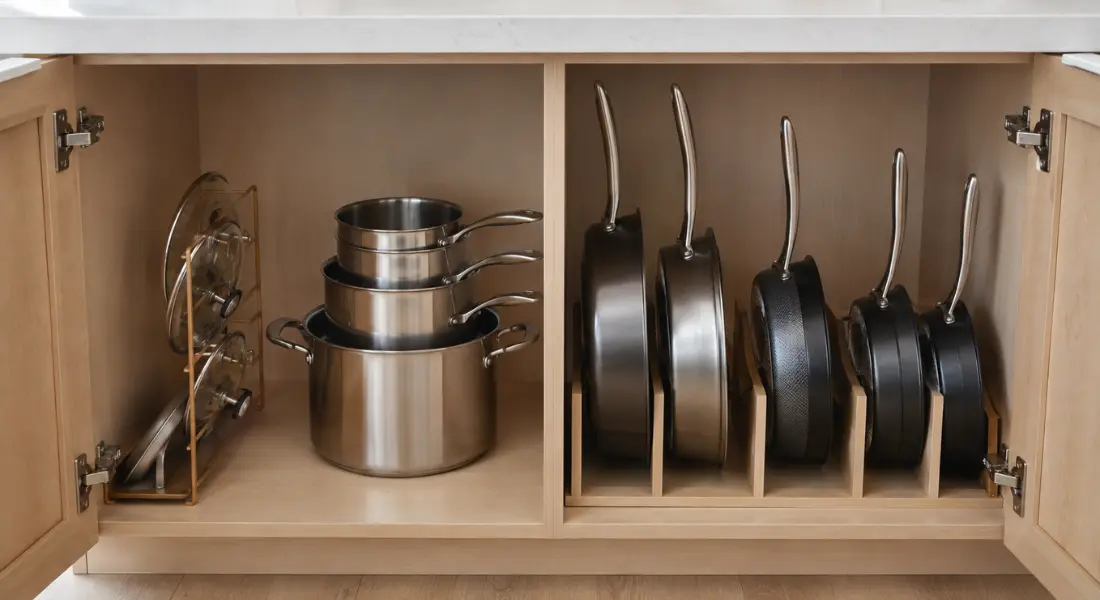
It can be hard to organize pots and pans when cabinet space is limited. Frying pans start piling up, lids slide behind stock pots, and the saucepan you use every day ends up underneath cookware you rarely touch.
The best way to organize pots and pans is not to fit as many pieces as possible into one cabinet. It is to create a system based on how often you cook with each piece, how heavy it is and what type of storage your kitchen already has. For some kitchens that means nesting pots and storing pans vertically.
Others work better with deep drawers, a corner cabinet carousel, wall mounted storage or a simple combination of these methods. The goal is straightforward that you should be able to take out the cookware you need without unloading everything around it.
Quick Answer:
Start by removing damaged, duplicate and rarely used cookware. Keep frequently used pieces in the easiest to reach locations, place heavy cookware in stable lower storage, separate lids if they create clutter and use vertical storage when large stacks make individual pans difficult to reach.
Use your kitchen layout to choose the starting point:
| Your Kitchen or Cookware | Best Starting Approach |
| Mostly cabinet storage | Nest pots, store pans vertically, separate lids |
| Deep drawers | Keep frequently used cookware visible from above |
| Fixed cabinet shelves | Heavy cookware below, lighter pieces above |
| Deep cabinets | Everyday cookware in front, occasional pieces behind |
| Corner cabinet | Keep regular use pieces near the opening or use a carousel |
| Small kitchen | Reduce duplicates and use vertical or wall space |
| Heavy Dutch ovens or cast iron | Use sturdy lower storage |
| Limited budget | Declutter and create zones before buying organizers |
| Loose pot lids | Use a dedicated vertical lid area |
| Limited cabinet space | Consider a wall rail or properly installed pot rack |
You do not need every storage method in this guide. Choose the few that solve the actual problems in your kitchen.
Reduce the Cookware Before You Organize It
Before rearranging shelves or shopping for organizers, take all of your cookware out of its current storage area. This gives you a clear view of both the collection and the available space.
Check each piece and ask:
- Do I use this cookware regularly?
- Do I own another piece that serves the same purpose?
- Is the handle secure?
- Is the pan badly warped?
- Is a coated cooking surface heavily damaged?
- Does this lid still belong to the cookware I use?
- Does this piece suit the way I cook now?
Duplicates need some judgment. Owning two similar frying pans may make sense if you regularly use both at the same time. Keeping several nearly identical pieces that rarely leave the cabinet usually makes organization harder. Once you decide what stays, divide the cookware by frequency of use.
Everyday Cookware
Your favorite frying pan, saucepan or medium pot should have one of the easiest storage locations. These are the pieces that should require the least effort to reach.
Regular Use Cookware
Cookware used every week but not every day can occupy normal cabinet or drawer space without taking the most convenient position.
Occasional Cookware
Large stock pots, roasting cookware, specialty pans and seasonal pieces can move to higher shelves or deeper storage areas. The principle is simple, storage convenience should roughly match frequency of use.
Organize Pots and Pans in a Kitchen Cabinet
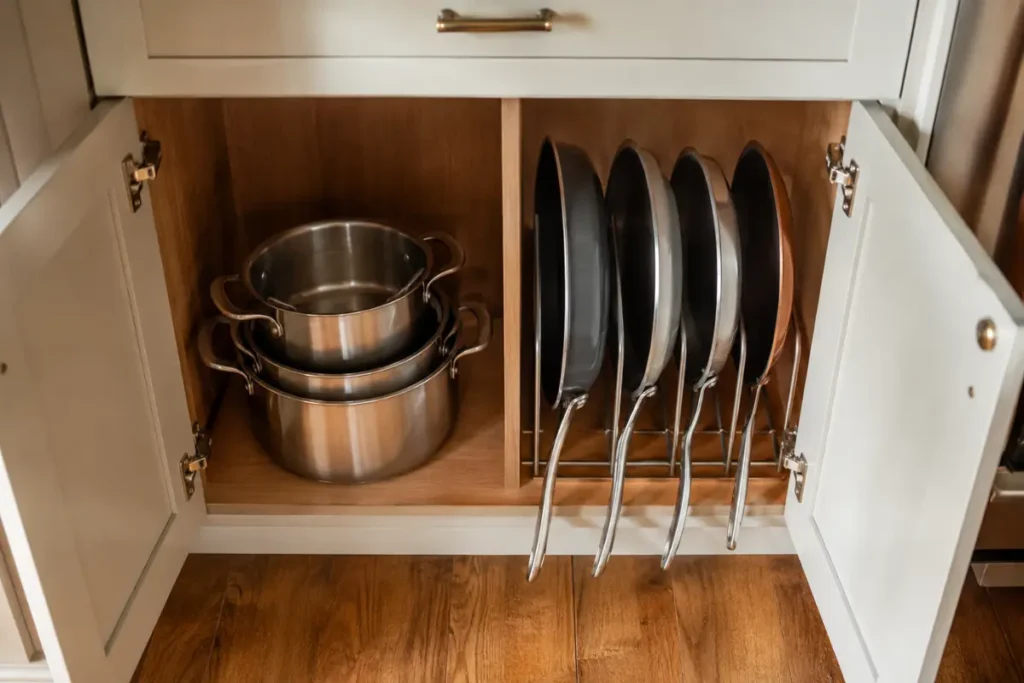
Cabinets work better when you organize cookware by shape and access rather than stacking everything together. Pots often nest efficiently. Frying pans usually benefit from individual access. Heavy cookware should stay where lifting remains comfortable.
Nest Pots in Short Stable Stacks
Place larger pots at the bottom and smaller compatible pots inside them. Nesting saves space without requiring extra organizers but avoids building a very tall stack.
If you regularly remove four pieces to reach the pot at the bottom the stack is too inconvenient for your routine. Split it into smaller groups or move the frequently used piece to a better location.
When coated cookware touches other cookware during storage suitable soft pan protectors can reduce rubbing and scratches.
Store Frying Pans Vertically When Possible
Frying pans are often easier to manage when stored on edge instead of one on top of another. A vertical divider allows you to pull out one pan without lifting the entire stack. Depending on the organizer and available space the same method may work for:
- Griddles
- Flat pans
- Cutting boards
- Some baking trays
Vertical storage is valuable because it gives each item more independent access.
Use Deep Cabinets From Front to Back
Deep cabinets usually have enough space. Their weakness is access. Keep your everyday frying pans, saucepans and pots near the opening.
Reserve the deeper area for cookware you use less often. If the back of the cabinet remains difficult to reach, a properly fitted pull out shelf can make the depth more practical.
Do not fill every available inch. A little open space makes it easier to grip handles, lift cookware and return items without rearranging the cabinet.
Organize a Cabinet With a Fixed Shelf
A fixed shelf creates two natural storage zones. Use the lower section for taller or heavier pieces such as Dutch ovens, stock pots and larger saucepans. The upper shelf can hold lighter pans, smaller pots or lids that fit comfortably within the available height.
If there is a large unused gap above short cookware, a shelf riser can create another level. Measure before purchasing one.
Check the:
- Cabinet width
- Cabinet depth
- Shelf spacing
- Door opening
- Height of your cookware
An organizer that fits inside the cabinet can still be impractical if it leaves too little room to lift cookware out.
Use Deep Drawers for Frequently Used Cookware
Deep lower drawers can work particularly well for everyday pots and pans because the contents are visible from above. Keep the cookware you use regularly in the most accessible part of the drawer. Dividers or pegs can help prevent pans and lids from shifting when the drawer opens.
Leave enough room to lift each piece independently and avoid loading a drawer beyond the manufacturer’s rated capacity. If your problem goes beyond cookware and you need to improve the entire drawer layout, see our guide on how to organize deep kitchen drawers for a more complete drawer organization system.
Give Pot Lids Their Own Storage Zone
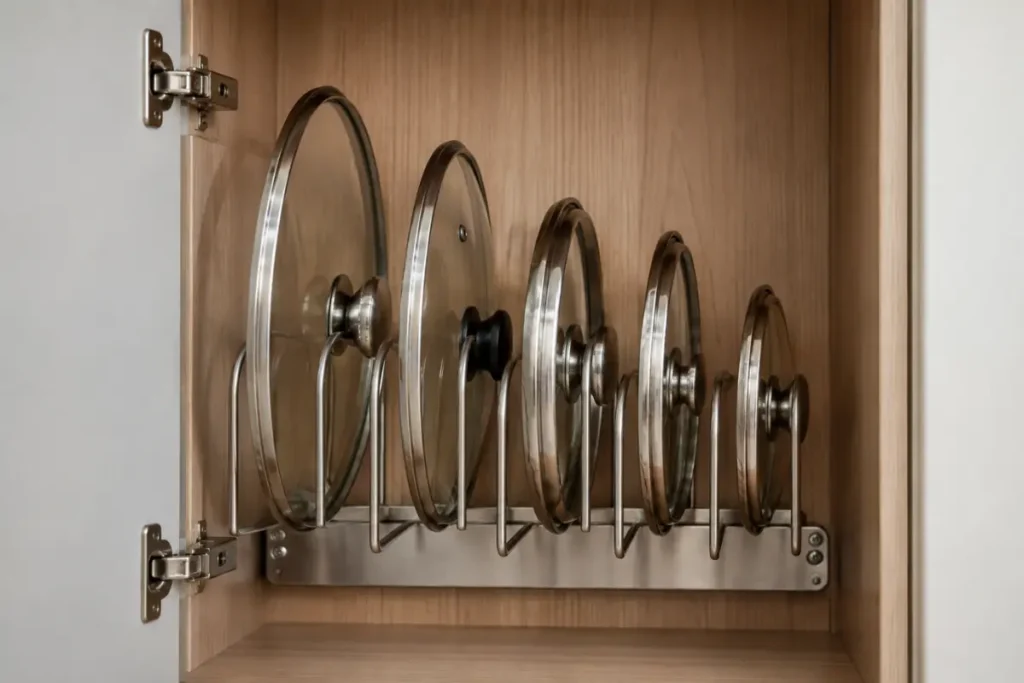
Pot lids usually become cluttered because their handles prevent efficient nesting. When lids are mixed loosely with cookware, they can slide behind pots or make entire stacks harder to access. Vertical storage usually works better.
Useful options include:
- Dedicated lid racks
- Adjustable dividers
- Narrow file style organizers suitable for the space
- Cabinet door lid holders
- A dedicated drawer section
Arrange lids so their sizes remain visible. You do not need to separate every lid from its pot. If one saucepan and lid are used together almost every day and storing them as a pair saves time keep them together.
For cabinet door storage check that the lids do not hit shelves or cookware when the door closes. The holder should also be appropriate for the weight of the lids.
Make a Corner Cabinet Easier to Use
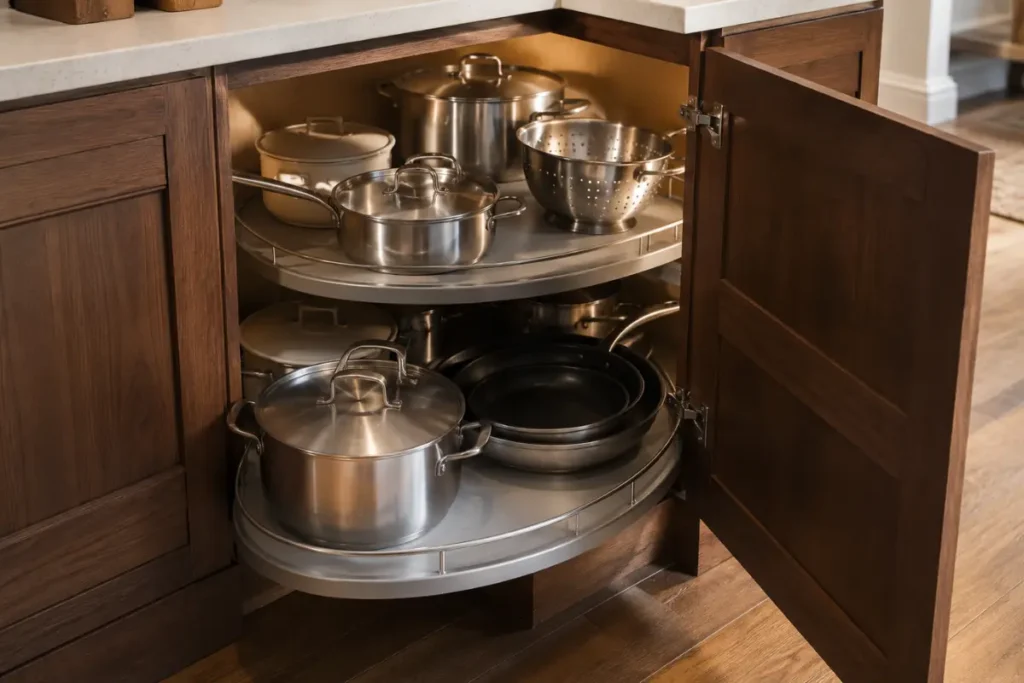
Corner cabinets can provide plenty of storage while making the deepest part difficult to reach. The solution is to organize according to accessibility. Keep the frying pans, saucepans and pots you use regularly near the opening.
Place specialty or occasional cookware farther inside. If your cabinet has a rotating carousel, group related cookware together so turning the shelf brings the category you need into reach.
A compatible corner pull out system can make the space even easier to use by bringing stored cookware toward the cabinet opening. Without either system, you can still make a corner cabinet practical by following one rule:
Easy to reach space for frequently used cookware, difficult to reach space for occasional cookware. There is no need to fill the deepest corner simply because it is available.
Pots and Pans Storage Ideas for a Small Kitchen
Small kitchens need stricter storage priorities. Start by reserving the easiest cabinet and drawer space for cookware you use several times each week.
Then reconsider where occasional pieces belong. A large stock pot used only a few times a year does not need to sit beside your everyday frying pan. Moving it to a higher or less accessible location can free valuable space.
Use vertical storage when it lets you access pans individually instead of creating another stack. Wall space can also help when cabinets are limited but reducing unnecessary cookware should come before filling every wall with storage.
A small kitchen often becomes easier to use when you keep fewer well chosen pieces rather than continually adding organizers.
Use Hanging Storage When Cabinet Space Is Limited
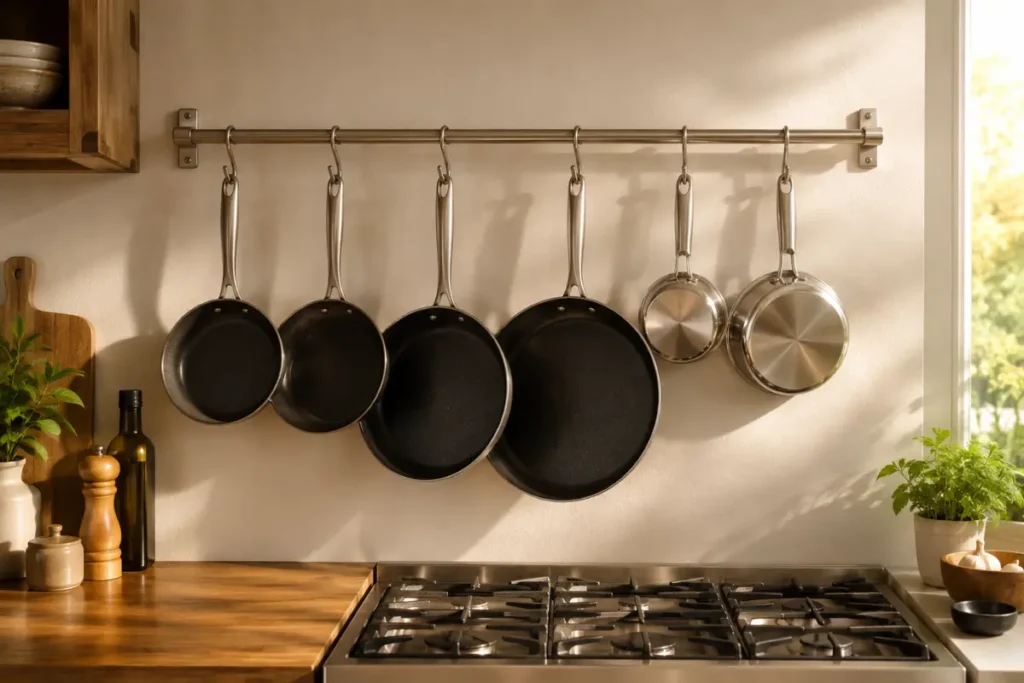
Hanging storage can move frequently used cookware out of crowded cabinets. It is most useful when your kitchen has a suitable wall or overhead space and the cookware can be mounted safely.
Wall Rails and Hooks
A properly mounted wall rail can hold suitable frying pans, small saucepans and other cookware with appropriate handles. Choose a position that does not interfere with:
- Cabinet doors
- Walkways
- Food preparation
- Appliances
- Frequently used outlets
Use mounting hardware suitable for the wall construction and the expected weight. Heavy cookware should not be supported by improvised hooks or weak fixings.
Pot Racks
A wall or ceiling mounted pot rack can hold more cookware than a short rail. Before installing one check:
- Reach height
- Head clearance
- Walking paths
- Cookware weight
- Mounting requirements
A pot rack should create easier access without making the kitchen uncomfortable to move through. Because exposed cookware can collect dust and cooking residue more easily than items stored inside cabinets, hanging storage is most practical for pieces that are used and cleaned regularly.
Organize Pots and Pans With What You Already Have
A better cookware setup does not always require buying a complete organization system. Start with the storage you already own.
Nest compatible pots. Keep everyday cookware toward the front. Move occasional pieces out of prime space. Give lids one predictable location.
A simple cabinet might be divided into informal zones:
- One side for nested pots
- One section for frying pans
- A narrow space for lids
- A deeper area for occasional cookware
A sturdy file style holder may work for lightweight lids or flat cookware if its size and strength suit the cabinet. If coated pans must be stacked use suitable soft protectors between them.
The aim of DIY organization is not to create complicated homemade storage. It is to solve the layout first and spend money only when a specific problem remains. Avoid homemade hanging systems that are not designed or securely installed to support cookware weight.
Using IKEA Storage for Pots and Pans
If you already use an IKEA kitchen or prefer IKEA organization products match the organizer to the storage problem rather than adding products without a clear purpose.
Depending on your kitchen system and current product availability, IKEA offers storage approaches such as drawer pegs and dividers, vertical pot lid organizers, wall rails and hooks and fittings designed to improve access inside corner cabinets. The same decision rules still apply:
| Problem | Storage Type to Consider |
| Cookware shifts inside drawers | Adjustable pegs or dividers |
| Lids create clutter | Vertical lid organizer |
| Cabinets are too full | Suitable rail and hooks |
| Corner cookware is difficult to reach | Compatible carousel or pull out |
| Mixed cookware fills one deep drawer | Adjustable internal zones |
Measure the actual cabinet, drawer and cookware before choosing an insert. Product sizes, ranges, compatibility and availability can change so verify current specifications rather than assuming one organizer will fit every kitchen.
Protect Your Cookware While Storing It
A useful storage system should make cookware easier to reach without damaging it. Different materials need different levels of protection.
Nonstick Pans
Avoid repeated hard contact between coated cooking surfaces and other pans. Vertical storage reduces contact between pieces. When pans must be nested, place suitable soft protectors between them. Avoid storing sharp utensils inside coated cookware.
Cast Iron
Cast iron is heavy. A sturdy lower cabinet or appropriately rated lower drawer is usually more practical than overhead storage. Store cast iron dry and avoid lightweight organizers that are not designed for its weight.
Stainless Steel
Stainless steel cookware usually nests well. You do not need to avoid stacking it entirely. Keep the stack short enough that individual pieces remain easy to remove.
Glass Lids
Glass lids need stable storage. A properly sized vertical organizer can keep them visible while reducing unnecessary contact between their edges. Do not force several lids into a holder that is too narrow.
Avoid Storage Mistakes That Bring the Clutter Back
Even a large kitchen can become difficult to use when the storage system works against the cooking routine.
Buying Organizers Before Measuring
Measure both the storage space and the cookware. Check width, depth, height, door clearance, pan handles and the dimensions of your largest lids.
Filling Every Available Inch
Open space inside a cabinet is useful. It gives you room to grip handles and return cookware without moving several other pieces. Maximum capacity does not equal maximum usability.
Keeping Daily Cookware at the Bottom of a Large Stack
If you regularly dismantle a stack to reach the same pan, change its position. Your most frequently used cookware should not be the hardest to retrieve.
Ignoring Weight
Heavy cookware needs stable storage. Follow the rated capacities of drawers, shelves, racks, hooks and organizers instead of assuming something can safely hold a load because the cookware physically fits.
Organizing for Appearance Instead of Use
A perfectly arranged cabinet can still be inconvenient. The real test is whether you can take out the frying pan, saucepan or pot you need without disturbing unrelated cookware.
Keep the Cookware System Working
Long term organization becomes easier when every cookware category has a predictable home.
For example:
- Frying pans stay in one vertical section
- Pots stay in a short nested group
- Heavy cookware stays in lower storage
- Lids stay in one dedicated area
- Occasional cookware stays on a secondary shelf
Your exact setup may be different. Consistency matters more than copying another kitchen. Return cookware to the same zones after washing it.
When you buy a new piece decide where it will live before adding it to the collection. If the assigned area is already full consider whether the new cookware replaces something you rarely use. A quick review every few months is usually enough to stop unused pieces from slowly rebuilding the clutter.
Conclusion
Learning how to organize pots and pans becomes much easier when you stop trying to make every piece fit into the same storage system. Start with the cookware you genuinely use. Keep daily pieces easy to reach, place heavy cookware in stable lower storage, nest compatible pots in short stacks and give frying pans and lids more independent access when possible.
Use awkward corners, deep cabinet areas and higher shelves for cookware that comes out less often. In a small kitchen, reducing duplicate pieces can be more effective than adding another organizer. After setting everything up use the kitchen normally for a week.
If you can take out the pan you need, cook, wash it and return it without rearranging several other pieces, your system is doing its job.
FAQs
Should pots and pans be stored close to the stove?
Frequently used cookware can be stored near the cooking area when the location is convenient and safe. Keep it somewhere that does not interfere with cabinet doors, appliances, walkways or hot cooking surfaces.
How many pots and pans should I keep?
There is no ideal number for every household. Keep enough cookware for the meals and cooking methods you regularly use. If several pieces perform the same job and rarely leave storage the collection may be larger than you need.
What is the best pots and pans storage option for renters?
Use removable solutions such as shelf risers, freestanding dividers, lid organizers, drawer inserts and other non permanent storage. Avoid drilling or installing permanent wall systems unless your rental agreement allows modifications.
Where should rarely used pots and pans be stored?
Use less convenient but still safe storage for occasional cookware. Higher shelves, deeper cabinet areas or secondary kitchen storage can work well as long as the cookware remains stable and accessible when needed.
Can pots and pans be stored above the refrigerator?
They can be stored there if the space is stable, suitable for storage and the cookware can be reached safely. It is better for lightweight or rarely used pieces than heavy cookware that would require awkward overhead lifting.
What if my cabinet is too narrow for a vertical pan organizer?
Use short nested stacks or divide the cookware between more than one storage area. Frequently used pans can stay near the front while less used pieces move elsewhere. Do not force an organizer into a cabinet if it reduces usable clearance.
Do I need to keep every pot lid with its matching pot?
No. Keeping lids in a separate vertical organizer often saves space. However a lid can stay with its pot when you use the pair regularly and the arrangement does not waste valuable storage space.