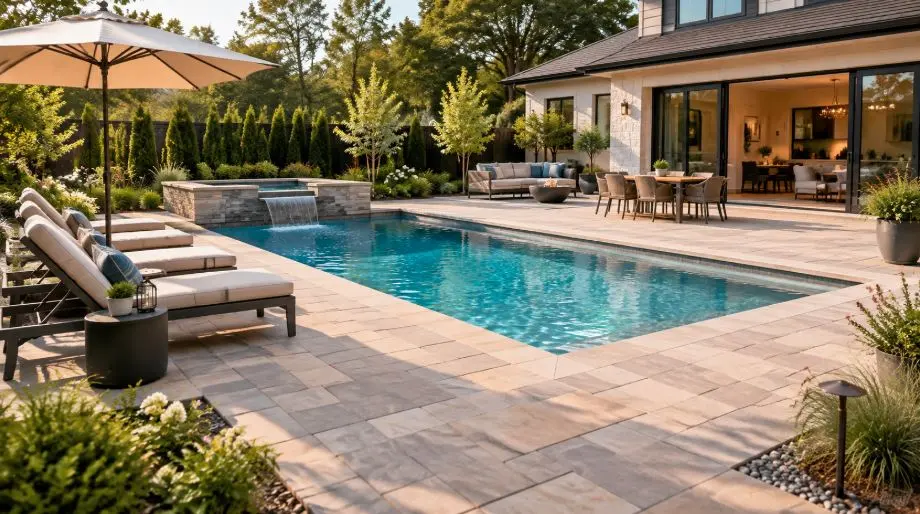
A pool deck should look inviting, but it also has a practical job. It has to handle wet feet, direct sun, pool water, outdoor furniture, and regular cleaning. A beautiful surface will soon become frustrating if it feels too hot, leaves puddles, or gives people no room to walk.
The best pool deck ideas combine a suitable surface with clear walking paths, comfortable seating, shade, drainage, and enough storage for everyday pool items. The right choice will also depend on the pool type, climate, yard size, maintenance routine, and available budget.
What Makes a Pool Deck Work Well?
A successful pool deck should feel comfortable while people are walking, sitting, drying off, or supervising children. Before choosing colors and furniture, focus on five practical needs:
- A textured surface suitable for wet outdoor areas
- Clear paths around the water
- Drainage that moves water away from the pool and house
- Shade for hot afternoons
- Furniture that does not block access or safety equipment
Pool barriers are also a separate but essential part of the plan. The U.S. Consumer Product Safety Commission recommends using layers of protection, including a barrier that fully surrounds the pool, self-closing and self-latching gates, and additional protection such as door alarms or a safety cover where needed. Local requirements may be different, so check the rules in your area before construction begins.
Start With the Right Pool Deck Material
The surface will affect comfort, appearance, upkeep, and the total project cost. Compare samples outdoors instead of choosing from a small showroom display. Look at each sample in full sun, shade, and wet conditions.
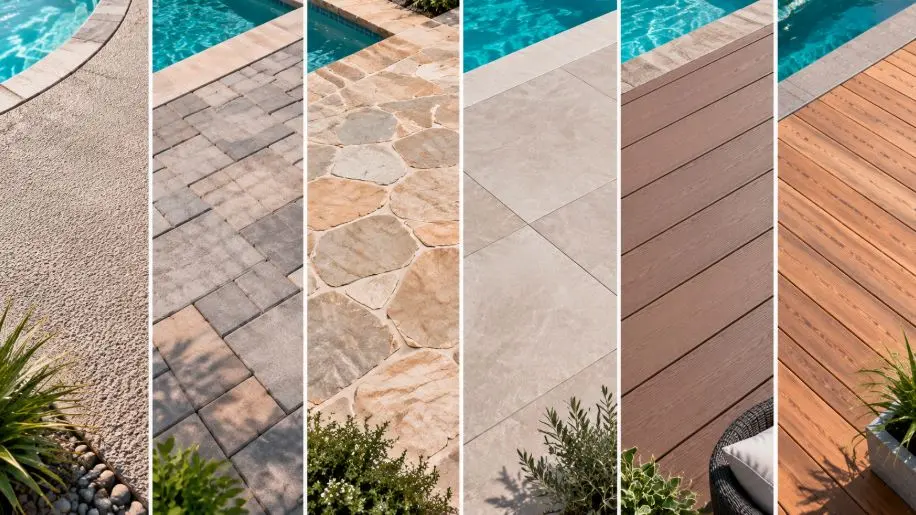
| Material | Works Well For | Points to Consider |
| Textured concrete | Large decks and flexible layouts | May crack or stain without proper installation and care |
| Concrete pavers | Repairable, patterned surfaces | Joints may collect weeds or require fresh joint material |
| Natural stone | High-end and organic designs | Performance varies by stone type, finish, and climate |
| Exterior porcelain tile | Clean, modern pool areas | Needs correct wet-area rating, drainage, and installation |
| Composite decking | Raised decks and wood-style designs | Can become hot in direct sun and may feel slick when wet |
| Wood decking | Warm, natural outdoor spaces | Requires regular maintenance and inspection |
For tile, check that the product is classified for exterior wet use rather than relying on appearance alone. Exterior installations also need suitable setting materials, movement joints, and a system that controls where water drains.
Natural stone should also be selected by performance, not just color. Ask the supplier about relevant testing for slip resistance, water absorption, strength, and freeze-thaw exposure in areas with cold winters.
Pool Deck Ideas Based on Materials and Patterns
- Use Large-Format Pavers for a Clean Look
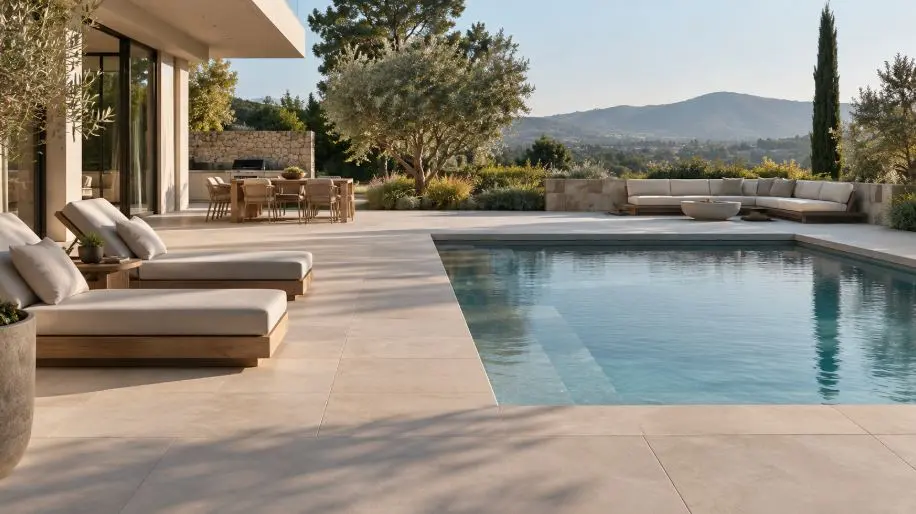
Large square or rectangular pavers create fewer visual breaks, making a small pool area appear calmer and less crowded. Light gray, warm beige, and soft limestone shades work well with many house exteriors.
Use a simple grid for a modern yard or a staggered layout for a more relaxed effect. Keep the joints narrow enough to look neat but appropriate for the chosen paving system.
- Choose Textured Concrete for a Simple Base
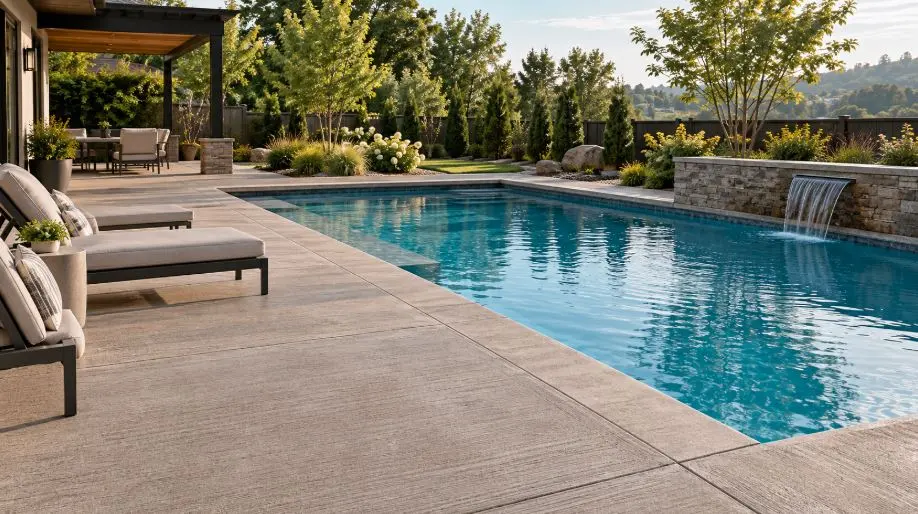
A lightly textured concrete deck can provide a clean background without competing with the pool. A broom finish or another pool-appropriate texture usually looks more natural than an overly glossy surface.
Concrete can also be divided into large panels with controlled joints. These lines may become part of the design rather than something to hide.
- Add Character With Exposed Aggregate
Exposed aggregate reveals small stones within the concrete surface. It adds texture and can hide minor dirt better than a perfectly smooth finish.
The amount and size of exposed stone matter. A very rough finish may feel uncomfortable to the touch, so inspect a finished sample before approving the material.
- Keep Stamped Concrete Patterns Subtle
Stamped concrete can copy the look of stone or pavers without using separate pieces. It works best when the pattern and color remain restrained.
Avoid using several strong colors, dark borders, and detailed patterns in the same area. One stone-inspired shade with a simple border usually feels more natural and is easier to match with future furniture.
- Use Light Natural Stone for a Relaxed Setting
Light stone can give the pool area a soft, established appearance. It pairs especially well with Mediterranean, coastal, desert, and traditional homes.
Stone varies from one batch to another, which is part of its appeal. Check the finish carefully, as polished or unsuitable stone may not perform well in wet conditions.
- Create a Modern Deck With Exterior Porcelain
Exterior porcelain can imitate concrete, limestone, or wood while keeping a more controlled pattern. It works well for homeowners who prefer clean lines and consistent coloring.
Choose a product intended for wet exterior areas. Installation should account for drainage, temperature changes, the substrate, and the manufacturer’s instructions.
- Introduce Warmth With Composite Decking
Composite boards can soften a yard dominated by concrete, glass, and water. They work particularly well on raised platforms, spa areas, or sections connected to the house.
Do not assume every composite board stays cool. Darker colors can get hotter in strong sunlight, and manufacturers advise checking heat and traction for the specific product. Lighter shades or heat-mitigating collections may be more suitable for sunny pool areas.
- Mix Two Materials Instead of Covering Everything With One
A full stone or composite deck may exceed the budget. Combining materials can reduce costs while creating a more thoughtful design.
For example, use concrete around the pool edge and composite boards beneath a covered seating area. Another option is a paver deck with narrow planting beds or gravel strips along the outer boundary.
- Frame the Pool With a Contrasting Border
A narrow border can define the pool without making the entire deck look busy. Choose a coping or edge material that contrasts gently with the main deck.
A dark border creates a sharp outline, while a slightly lighter border feels softer. Make sure the edge remains easy to see, particularly near steps and changes in level.
Ideas for Comfort and Everyday Use
- Divide the Deck Into Activity Zones
Treat the pool deck like an outdoor room rather than one open surface. Create separate areas for walking, lounging, dining, and storage.
Keep the busiest route clear between the house, the pool entrance, and the seating area. Furniture should not force people to squeeze around chairs or walk too close to the water.
- Add a Shaded Lounge Area
An umbrella provides flexible shade, while a pergola or covered structure creates a more permanent retreat. Place shade where it will protect seating during the hottest part of the day.
Before building a permanent cover, consider sun direction, wind, drainage, and local permit requirements. A badly placed roof may direct rainwater toward the pool or block useful views from the house.
- Build a Low Bench Along the Outer Edge
A built-in bench gives guests a place to sit without filling the deck with separate chairs. It can also help define the boundary between the deck and landscaping.
Keep the design simple and avoid sharp corners in busy walking areas. Waterproof storage beneath the bench can hold cushions, but damp towels should be ventilated rather than sealed inside.
- Create a Dining Zone Away From Splashing
Place dining furniture where people can move chairs without blocking the pool path. A spot closer to the house may also make serving food easier.
Use outdoor furniture that suits the deck size. A large dining set can overwhelm a narrow pool area, while a round table often fits better into compact or irregular layouts.
- Add a Towel and Storage Station
Pool floats, towels, goggles, and cleaning tools can quickly make a deck feel cluttered. Give these items a defined place.
A small cabinet, towel hooks, weather-resistant basket, or ventilated storage bench may be enough. Keep pool chemicals in their proper, secure storage area rather than in a general-use deck cabinet. The CDC warns that mishandling pool chemicals can cause serious injuries, so follow product labels and keep them out of children’s reach.
- Install an Outdoor Rinse-Off Area
A foot rinse or outdoor shower can help keep grass, dirt, and sand out of the pool. Put it along the route people already take to the water, and if the route continues into a bathroom, these doorless walk-in shower ideas may help you plan that space too.
Drainage and plumbing should be planned before the surrounding deck is finished. Major plumbing work may require a qualified professional and approval under local rules.
- Use Lighting to Mark Paths and Steps
Soft lighting can make the deck more comfortable after sunset. Place lights near steps, level changes, gates, pathways, and seating instead of flooding the entire yard with bright light.
Low-level lighting reduces glare on the water. Electrical fixtures and wiring near a pool should be suitable for the location and installed by a qualified professional in accordance with local safety requirements.
Landscaping Ideas Around the Pool Deck
- Soften Hard Edges With Narrow Planting Strips
A thin garden bed can break up a large concrete surface. Ornamental grasses, compact shrubs, and low groundcovers add movement without taking over the deck.
Avoid plants with thorns, weak branches, aggressive roots, or heavy leaf drop near water. The best choices depend on local climate, sunlight, and the pool’s maintenance system.
- Add Privacy Without Building a Solid Wall
Slatted screens, hedges, tall planters, and layered planting can create privacy while keeping the space open. Repeat one screen material elsewhere, such as on a pergola or storage cabinet, to make the yard feel connected.
Check sight lines from neighboring properties as well as from inside the house. Privacy should not block the view needed to supervise the pool.
- Use Decorative Gravel in Low-Traffic Areas
Gravel can fill narrow strips between paving and planting beds. It helps create contrast and may be less expensive than extending the main deck material across the whole yard.
Keep loose stones away from the immediate pool edge and main walking paths. They can be uncomfortable when worn barefoot and may get wet.
Ideas for Small and Above-Ground Pools
- Keep a Small Pool Deck Visually Simple
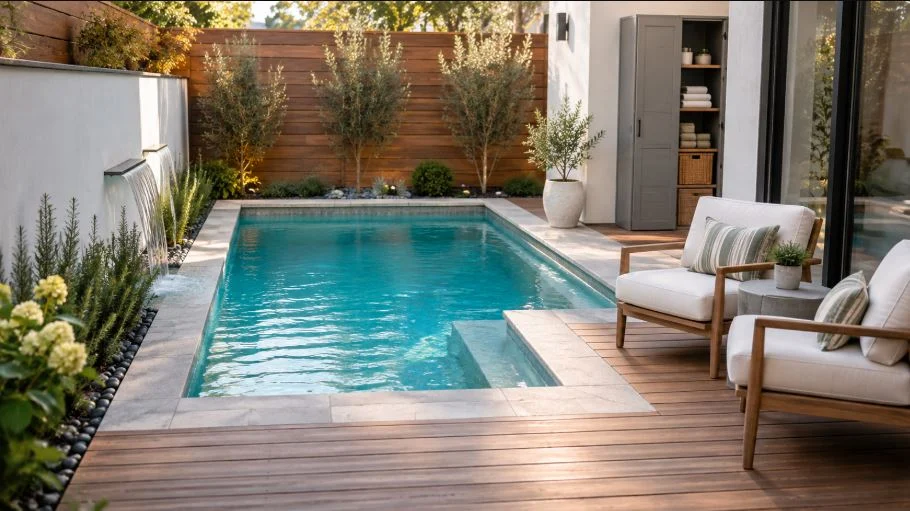
A compact space usually looks larger with fewer materials, smaller furniture, and a limited color palette. Continue the same paving direction from the house toward the pool to create a stronger visual connection.
Use one lounge chair instead of forcing in a matching pair. Wall-mounted hooks, slim benches, and folding side tables can provide function without taking up permanent floor space.
- Build a Partial Deck Around an Above-Ground Pool
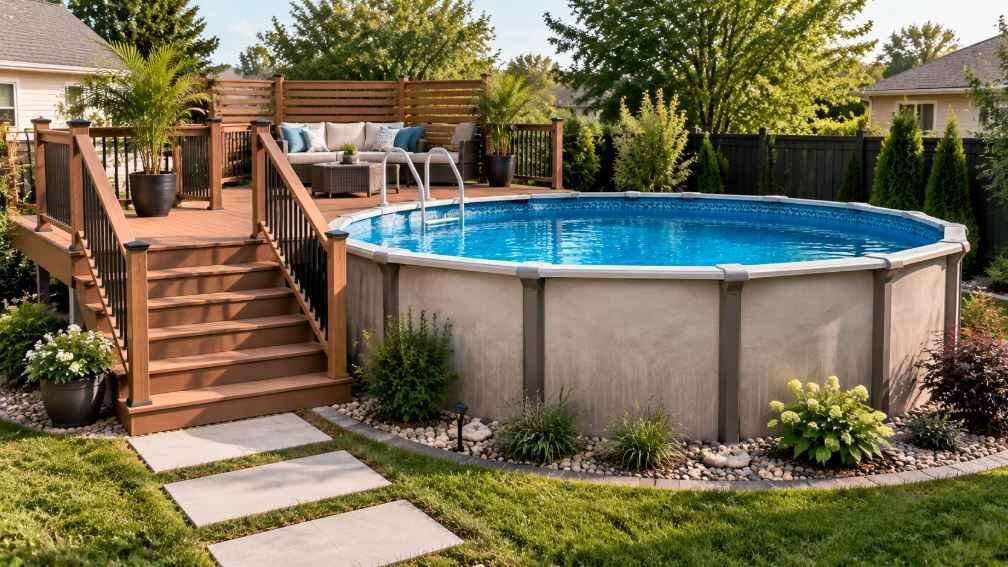
A full wraparound deck is not always necessary. A partial deck can provide access, seating, and a place for supervision while leaving part of the pool open.
The deck structure, stairs, rails, gate, and connection to the pool need careful planning. Access ladders and steps should not create an easy unsupervised route for children. CPSC guidance recommends securing or removing above-ground pool ladders and steps when the pool is not in use, alongside other protective measures.
How to Refresh an Existing Pool Deck on a Smaller Budget
A complete replacement may not be needed when the structure remains sound. Start by repairing problems rather than hiding them beneath furniture or a decorative coating.
Possible updates include:
- Pressure-cleaning with a method suitable for the surface
- Repairing cracks after identifying their cause
- Applying a pool-deck-rated coating or resurfacing system
- Replacing damaged pavers individually
- Adding umbrellas, planters, and outdoor cushions
- Creating a contrasting border with compatible materials
- Improving storage and removing unused furniture
- Updating old lighting with suitable outdoor fixtures
Do not cover moving cracks, drainage problems, loose tiles, or structural damage without professional assessment. A cosmetic finish will not correct movement beneath the surface.
Pool Deck Mistakes That Affect the Whole Space
Choosing Appearance Before Performance
A smooth, polished surface may look attractive in a photo but perform poorly beside water. Ask for wet-area performance information and view installed examples before ordering.
Forgetting How Hot the Surface May Feel
Test material samples in direct afternoon sun. Color, finish, climate, and shade can all affect comfort. Even products marketed as cooler can still get hot in strong sunlight.
Filling Every Open Area With Furniture
Leave room for people carrying towels, moving around chairs, and entering or leaving the pool. Open space is part of the design, not wasted space.
Ignoring Water Flow
Standing water can make the deck harder to use and may point to poor grading or blocked drainage. Plan how rain, splash water, and runoff will move before selecting the final surface.
Treating Safety Features as an Afterthought
Fences, gates, covers, clear views, rescue equipment, and supervision should be planned with the deck layout. Decorative screens or tall plants should never make the pool harder to monitor.
Frequently Asked Questions
What is the most affordable pool deck option?
Basic textured concrete is often one of the more budget-friendly choices for a large area, but local labor, site preparation, drainage, and finish will affect the final cost. Resurfacing an existing sound deck may cost less than replacing it.
What is the best surface for a pool deck?
There is no single best material for every property. A suitable surface should be rated for exterior wet use, comfortable underfoot, appropriate for the climate, and maintainable.
How can I make a pool deck feel cooler?
Use lighter colors, provide shade, include planting near the outer edge, and compare physical samples in direct sun. Avoid assuming that wood-look or composite products will remain cool throughout the day.
Can regular indoor tile be used around a pool?
Indoor tile should not be used unless the manufacturer specifically approves it for the exterior wet conditions involved. Pool areas need suitable slip performance, setting materials, drainage, and movement accommodation.
How much furniture should be placed on a pool deck?
Use only the furniture that fits while preserving clear walking routes. Start with the main function, such as lounging or dining, and add smaller pieces only when enough open space remains.
Are dark pool decks a good idea?
Dark surfaces can create a dramatic look, but they may show water marks and feel hotter in strong sun. Use dark colors as a border or shaded accent when a full dark deck would be uncomfortable.
Choose the Deck Around Your Real Routine
The strongest pool deck ideas are not always the most expensive or detailed. A simple surface with good drainage, comfortable shade, clear paths, and well-placed seating can work better than a complicated design filled with decorative features.
Begin with how the area will be used each week. A family pool may need open supervision, storage, and durable surfaces. A smaller adult retreat may place more value on loungers, privacy, and planting. Once those priorities are clear, materials and colors become much easier to choose.